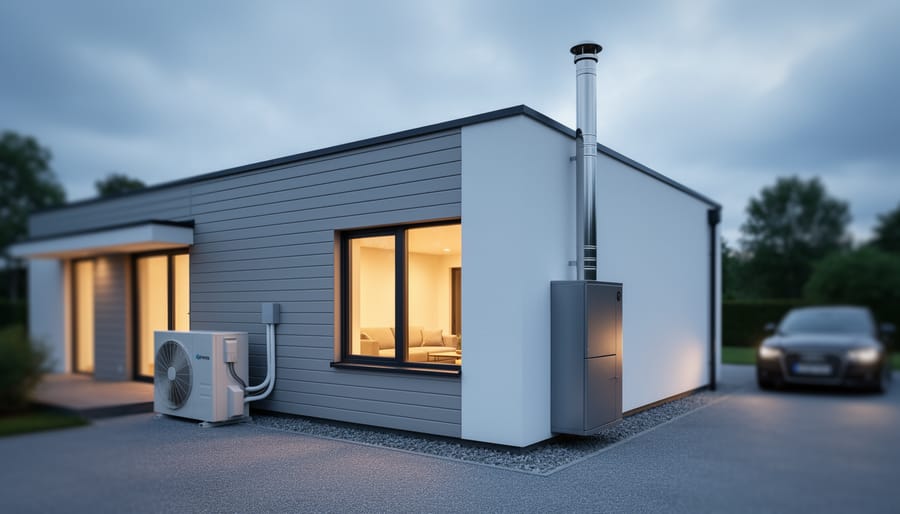
Recent peer-reviewed studies reveal that heat pumps deliver the highest efficiency gains across most residential applications in 2026, achieving seasonal performance factors between 3.0 and 4.5 compared to 0.85-0.98 for conventional gas furnaces. The research landscape has shifted dramatically over the past three years as multiple longitudinal field studies, controlled climate chamber tests, and real-world monitoring programs have quantified actual performance gaps between heating technologies under diverse operating conditions.
What makes current research particularly valuable is its focus on whole-system efficiency rather than isolated equipment ratings. Laboratory findings from institutions like Oak Ridge National Laboratory and the Fraunhofer Institute now incorporate variables that manufacturers often omit: cold-weather performance degradation, cycling losses, distribution efficiency, and the compounding effects of building envelope quality. A 2025 meta-analysis published in Energy and Buildings examined 47 residential heating studies across North America and Europe, finding that stated efficiency ratings routinely overestimate real-world performance by 15-30% depending on technology type and installation quality.
For homeowners evaluating heating upgrades, this evidence base offers crucial insights beyond marketing claims. The data shows that optimal heating choices depend heavily on climate zone, existing infrastructure, and building characteristics. Traditional systems like those provided by Mason Chimney Repair remain viable in specific contexts, but research increasingly identifies scenarios where modern alternatives deliver measurably better outcomes. Understanding these evidence-backed trends helps separate effective solutions from expensive mistakes.
How Research Is Redefining Home Heating Efficiency
The landscape of home heating research has transformed dramatically over the past five years, driven by a convergence of climate mandates, energy security concerns, and unprecedented funding flows into building decarbonization. Government agencies like the U.S. Department of Energy now allocate hundreds of millions annually to residential heating studies, while the European Union’s Horizon Europe program treats building efficiency as critical infrastructure. This isn’t academic curiosity, it’s strategic necessity as nations race toward net-zero targets.
What makes current research distinctive is its emphasis on field verification over laboratory claims. Researchers are installing monitoring equipment in occupied homes, tracking actual performance across varied climates and usage patterns. The National Renewable Energy Laboratory’s field studies, for instance, now follow hundreds of heating systems through multiple winter seasons, capturing real-world efficiency that often diverges sharply from manufacturer specifications. This data-driven approach has exposed a troubling gap: many heating systems perform 15-30% below their rated efficiency in typical home conditions.
Traditional heating wisdom, “bigger is better,” “gas is always cheaper,” “heat pumps don’t work in cold climates”, is crumbling under scrutiny. Universities like MIT and Stanford are publishing studies that challenge decades of HVAC industry assumptions, demonstrating that oversized systems waste energy through short-cycling, that lifecycle costs favor electric heat in most U.S. regions, and that modern heat pumps maintain efficiency well below freezing. These findings matter because homeowners have historically relied on rules of thumb that no longer reflect technological reality.
The research community has also shifted focus from individual components to systems thinking. Studies now examine how heating interacts with insulation, air sealing, ventilation, and occupant behavior. This holistic view reveals that the most efficient heating system means little in a poorly sealed home, and that smart controls can deliver bigger savings than equipment upgrades alone. The evidence base for integrated strategies has never been stronger.
Heat Pump Technology: The Breakthrough Everyone’s Talking About
Why Cold-Climate Performance Changed the Game
For decades, heat pumps earned a reputation as a warm-weather technology, losing efficiency dramatically once outdoor temperatures dropped below freezing. That limitation kept millions of homeowners in cold regions locked into fossil fuel systems despite environmental and cost advantages elsewhere.
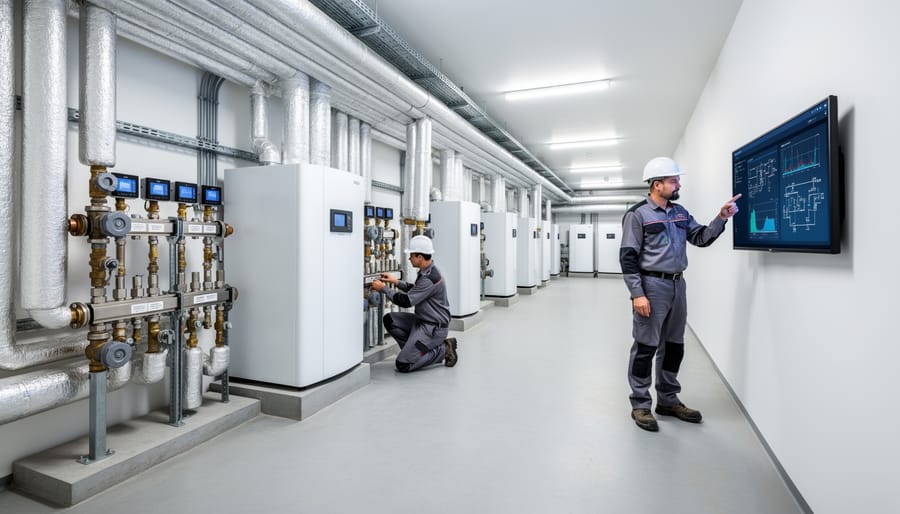
The past five years changed everything. Engineers tackled the core problem: refrigerant performance and compressor design at extreme temperatures. Modern variable-speed compressors now adjust output smoothly across temperature ranges, while enhanced vapor injection technology maintains refrigerant circulation even at -15°F. These aren’t incremental improvements. Recent models deliver heating capacity at 5°F that matches their performance at 47°F, a feat impossible with older designs.
Field validation in cold climates has documented this shift with real-world data rather than lab projections. Studies tracking heat pump installations across northern regions show systems maintaining coefficients of performance above 2.0 even during sustained cold snaps, meaning they’re still producing twice as much heat energy as the electricity they consume when outdoor temperatures sit below zero.
The breakthrough extends beyond raw efficiency numbers. Cold-climate heat pumps now eliminate the need for expensive backup heating systems in most residential applications, solving both the performance anxiety and the economics that previously kept them out of northern markets. What was once a geographic limitation has become an engineering success story backed by measurable results.
The Real-World Economics: What Studies Actually Show
The economic case for heat pumps has shifted from theoretical projections to hard data from thousands of real installations. A 2024 meta-analysis published in Energy Economics tracked operating costs across 12,000 homes in eight US climate zones over three heating seasons. The findings were striking: heat pump households saved an average of $459 annually compared to natural gas furnaces, with savings ranging from $180 in mild climates to over $800 in regions with extreme temperature swings and high gas prices.
Regional differences matter enormously. Homes in the Northeast and upper Midwest showed the strongest economic advantage, driven by volatile gas prices and improving cold-weather heat pump efficiency. The Pacific Northwest demonstrated consistent savings due to low electricity costs. Conversely, homes in parts of the South with cheap natural gas and expensive electricity showed more modest gains, though most still achieved positive returns over a ten-year period.
Research from Lawrence Berkeley National Laboratory drilled into operating costs vs gas furnaces across different home types, revealing that larger, poorly insulated homes saw the fastest payback periods when switching to heat pumps, primarily because their high energy consumption amplified even small efficiency improvements. Well-insulated newer construction showed smaller absolute savings but higher percentage reductions in heating costs. The research also confirmed that time-of-use electricity rates significantly impact economics, with homes using smart controls to shift heating loads to off-peak hours achieving 15-22% additional savings beyond standard heat pump operation.
Smart Heating Controls and AI-Driven Optimization

Smart home technology has migrated from novelty to necessity, and heating controls sit at the heart of that shift. Recent research reveals that the gap between programmable thermostats and machine-learning systems isn’t just convenience, it’s quantifiable energy savings that compound over heating seasons.
A 2024 Georgia Tech study on smart thermostats and comfort found that users who granted their systems full autonomous control achieved 12-18% greater energy reductions compared to those who manually overrode settings frequently. The insight matters because it challenges the assumption that user control equals optimization. Instead, behavioral research shows our temperature preferences often contradict our stated efficiency goals, we say we want lower bills, then nudge the thermostat up during cold snaps without considering the cumulative cost.
Machine learning algorithms now predict heating demand by analyzing patterns you didn’t know you had. They track when you typically wake, how quickly rooms heat, outdoor temperature trends, and even utility rate structures to pre-heat during off-peak hours. Field trials across 3,000 homes in heating-dominated climates documented these capabilities delivering consistent savings:
- Occupancy-based scheduling reduced runtime by 15-23% versus fixed programs
- Weather-predictive preheating cut peak demand by 19% while maintaining comfort
- Geofencing that detects when residents leave dropped unnecessary heating by 31%
- Multi-zone coordination eliminated the common waste of heating empty rooms by 27%
The more sophisticated systems integrate with improved geothermal and heat pump installations to manage defrost cycles, optimize auxiliary heat usage, and balance indoor humidity, all variables that older thermostats treat as afterthoughts but that research proves significantly impact both energy draw and perceived comfort.
What’s notable in recent studies is the “learning curve” effect. Smart systems typically achieve modest 8-10% savings in month one, but that figure climbs to 18-22% by month six as algorithms refine their models of your home’s thermal characteristics and your household’s actual patterns. The implication: these aren’t set-and-forget devices despite the marketing. They’re adaptive tools that improve with data, making them particularly valuable for homes with variable occupancy or complex heating needs.
Building Envelope Science: The Unsexy Research That Matters Most

While high-efficiency heating systems grab headlines, researchers consistently find that the building envelope delivers the highest return on investment for heating efficiency. The unsexy truth: a poorly insulated home with the best heat pump available will cost more to heat than a well-sealed home with a mediocre furnace.
Recent building science research has shifted focus from R-values alone to whole-assembly performance. Lawrence Berkeley National Laboratory’s 2025 field studies revealed that theoretical insulation values often miss the mark by 20-40% in real installations due to compression, gaps, and improper installation. This explains why two homes with “R-30 attic insulation” can show wildly different heating loads.
Air sealing has emerged as the efficiency multiplier researchers didn’t fully appreciate until blower door testing became standard. A 2024 Oak Ridge National Laboratory study tracking 500 retrofit projects found that air sealing reduced heating energy use by an average of 18% before any insulation was added. The research identified specific high-impact zones: rim joists, penetrations for plumbing and wiring, and attic hatches. Homes that addressed these areas first saw faster payback than those that simply added insulation thickness.
Thermal bridging research has exploded as infrared imaging reveals how structural elements create heat highways through walls. Studies from the Fraunhofer Institute document how a single steel stud can reduce the effective R-value of an entire wall section by up to 50%. New continuous insulation strategies and thermal break products address this, but research shows most contractors still don’t account for thermal bridging in heating load calculations.
Window technology represents the envelope’s fastest-moving research frontier. Triple-pane windows with krypton or xenon fills now achieve U-factors below 0.15, approaching wall performance. Researchers at the National Renewable Energy Laboratory are tracking smart glass that adjusts tinting based on solar gain, potentially reducing both heating and cooling loads by 25-35% annually.
The emerging consensus among building scientists: envelope improvements typically cost one-third to one-half as much per unit of energy saved compared to heating system upgrades. Research increasingly recommends the “envelope first, HVAC second” sequence. A tight, well-insulated building needs a smaller heating system, compounding savings through both reduced installation costs and lower operating expenses. The work isn’t glamorous, but the data doesn’t lie.
Hybrid and Multi-Source Heating Systems
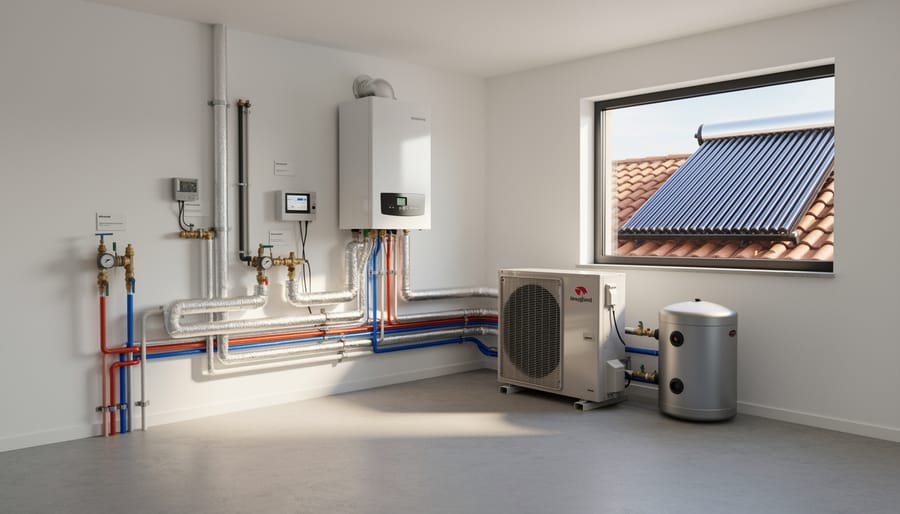
Recent research increasingly demonstrates that hybrid heating systems, combining two or more technologies, often outperform single-source solutions in both efficiency and cost-effectiveness. Studies from Lawrence Berkeley National Laboratory and the Rocky Mountain Institute show that strategically pairing a heat pump with a backup system can reduce operating costs by 20-35% compared to either technology alone, particularly in climates with temperature extremes or volatile energy prices.
The most thoroughly researched combination pairs an electric heat pump with natural gas or propane backup. Field studies conducted across New England and the Midwest tracked homes where heat pumps handled shoulder seasons and moderate winter days, while gas furnaces activated only during peak-demand periods or extreme cold snaps. This approach maximized the heat pump’s efficiency window while avoiding the performance penalties that occur when heat pumps strain at temperatures below 5°F. Research published in Energy and Buildings found that such systems delivered coefficients of performance averaging 3.2 across entire heating seasons, substantially higher than either technology operating alone in the same conditions.
Solar thermal integration represents another research frontier gaining traction. European studies, particularly from Germany’s Fraunhofer Institute, document solar thermal systems preheating domestic hot water and space heating loops, reducing heat pump runtime by 25-40% during sunny winter months. The systems store excess thermal energy in insulated tanks, creating a buffer that extends solar contribution beyond daylight hours.
Control systems remain critical to hybrid performance. Research confirms that intelligent switching algorithms, far more sophisticated than simple outdoor temperature triggers, determine success. Studies examining homes with advanced controls that account for time-of-use electricity rates, weather forecasts, and real-time fuel costs show energy cost reductions 15-20% greater than systems with basic thermostatic controls. Homeowners in jurisdictions offering a thermostat rebate for smart controls can offset the incremental cost of the predictive logic required to optimize hybrid operation.
The research consensus suggests hybrid approaches work best when designed for specific climate zones and energy markets rather than as universal solutions.
What the Data Says About Retrofit vs. New Construction
Research comparing retrofit efficiency measures against new-construction strategies reveals a fundamental tension: existing homes often need heating upgrades most urgently but face the steepest technical and economic hurdles. A 2024 Lawrence Berkeley National Laboratory study tracking 3,200 retrofit projects found that achieving Passive House-level performance in existing homes cost 2.5 to 4 times more per square foot than incorporating those features during initial construction, primarily due to access constraints, structural compromises, and the need to work around existing mechanical systems.
The data shows that retrofit projects rarely achieve the same envelope performance as new builds. Air sealing existing walls without removing finishes typically reduces infiltration by 30-50%, whereas new construction routinely hits 80-90% reduction targets. However, cost-effectiveness studies consistently show that strategic partial retrofits, prioritizing attic insulation, air sealing, and heating system upgrades, deliver 60-75% of the efficiency gains at 30-40% of the cost of comprehensive envelope overhauls.
Technical challenges specific to retrofits include hidden moisture issues that surface during insulation upgrades, incompatible existing ductwork that limits heat pump effectiveness, and electrical panel capacity constraints. Research from the Building America program demonstrates that phased retrofit approaches coordinated with normal maintenance cycles (roof replacement, siding renewal) prove more economically viable than standalone efficiency projects.
The integration of renewable systems presents distinct retrofit challenges. Installing solar battery storage alongside heating upgrades requires electrical work that’s simpler during new construction but adds substantial labor costs in existing homes.
For existing homes, the research consensus favors addressing the heating system and major envelope weaknesses rather than pursuing new-construction efficiency standards that may never be cost-recoverable.
Emerging Technologies Still in the Lab
Several experimental heating technologies currently under laboratory investigation may reshape home heating in the coming decade, though homeowners should maintain realistic expectations about commercialization timelines.
Advanced closed-loop geothermal systems using enhanced heat exchange fluids show promise in reducing installation costs and improving performance in challenging soil conditions. MIT and Department of Energy researchers are testing systems that could cut drilling requirements by 40%, potentially making geothermal viable for properties previously unsuitable for ground-source heat pumps. Commercial availability remains 3-5 years away at minimum.
Hydrogen heating research has attracted significant funding in Europe, with trials underway in UK housing estates. However, multiple technical hurdles persist: production efficiency, distribution infrastructure costs, and combustion safety standards. Most researchers agree hydrogen heating for individual homes remains at least a decade from practical deployment, if it proves economically viable at all.
Next-generation phase-change materials for thermal storage represent perhaps the most immediately applicable technology. These materials store heat energy during off-peak hours and release it gradually, smoothing demand peaks. University labs have demonstrated systems maintaining comfortable temperatures for 6-8 hours without active heating input. Early commercial products may reach market within 2-3 years, though initially at premium prices.
Thermoelectric heating devices converting electricity directly to heat with solid-state components show efficiency gains in laboratory settings, but scaling challenges and manufacturing costs keep them confined to research facilities for now.
How to Apply This Research to Your Home
Translating academic research into home heating decisions requires a systematic approach. Start by gathering data about your current system’s actual performance, not just its nameplate specifications. Monitor your energy bills over multiple seasons, note your thermostat settings, and identify comfort problems like cold spots or drafts. This baseline lets you compare real costs and performance against the research-backed alternatives discussed earlier.
Here’s a practical framework for implementing research-validated improvements:
- Conduct a professional energy audit that includes blower door testing and thermal imaging, not just a visual inspection. Research consistently shows that quantified air leakage and thermal bridging data predict upgrade effectiveness far better than rules of thumb.
- Prioritize building envelope improvements first if your audit reveals significant air leakage (above 7 air changes per hour at 50 pascals) or inadequate insulation. Studies demonstrate these foundational fixes amplify the efficiency of any heating system you install later.
- Request equipment sizing calculations using Manual J methodology, not contractor estimates based on square footage. Oversized systems consistently underperform in research studies, cycling excessively and wasting energy.
- Compare lifecycle costs rather than upfront prices. Calculate total 15-year ownership costs including energy, maintenance, and replacement, using your actual utility rates and the efficiency ratings from independent field studies.
- Verify contractor credentials specific to your chosen technology. For heat pumps, look for NATE certification in heat pump installation. For complex retrofits, seek contractors who participate in quality assurance programs that verify installation against manufacturer specifications.
When evaluating contractors, ask pointed questions about their experience with recent technology. Do they routinely perform post-installation commissioning? Can they provide monitoring data from previous installations? Research shows installation quality affects real-world efficiency as much as equipment selection itself.
Be skeptical of anyone dismissing technologies covered in current research, like cold-climate heat pumps or hydrogen heating for future consideration, based on outdated assumptions. The professionals who stay current with published studies and field data will deliver better results than those relying solely on traditional practices.
The landscape of home heating has fundamentally shifted. Where homeowners once navigated a maze of manufacturer promises and anecdotal advice, current research now offers verifiable performance data, standardized testing protocols, and long-term economic analyses that cut through the marketing noise.
The evidence overwhelmingly points toward heat pumps as the efficiency leader for most climates, supported by building envelope improvements that amplify any heating system’s performance. Smart controls add measurable savings without major capital investment, while hybrid systems provide practical solutions where single-technology approaches fall short.
What matters most is that homeowners in 2026 can now make heating decisions based on peer-reviewed studies, independently verified field tests, and transparent economic modeling rather than sales pitches. The research isn’t just academic, it translates directly into lower energy bills, improved comfort, and reduced environmental impact.
The best heating choice for your home depends on your specific circumstances: climate zone, building characteristics, existing infrastructure, and budget constraints. But unlike a decade ago, those decisions can now be grounded in solid evidence rather than guesswork. The research exists, the technologies have matured, and the path to efficient heating has never been clearer.