Science is the systematic study of the natural world through observation, experiment, and evidence, producing knowledge that can be tested and refined. Technology is the practical application of that knowledge to solve problems, from a simple lever to a utility-scale solar farm. Science asks why something happens. Technology asks how we can use what we’ve learned to get something done.
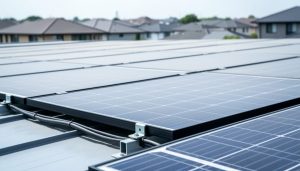
The two are often lumped together, but they work as partners in a loop. Scientific discovery opens new possibilities, technology turns them into tools, and those tools then enable sharper scientific questions. Photovoltaic cells are a clear case: understanding how light frees electrons in semiconductors came first, and the panels on rooftops came after decades of engineering.
That relationship matters most in energy, where every advance in batteries, wind turbines, and grid systems rests on both disciplines working together. This article defines each term in plain language, explains how they interact, outlines their main branches, and shows where they’re reshaping how we generate and use power.
What Science and Technology Mean: Plain-Language Definitions
Science: Understanding How Energy Behaves
Science is a method before it is a body of facts. Researchers observe something puzzling, such as why solar cells lose efficiency as they heat up, then propose a hypothesis to explain it. They test that idea through controlled experiments, record the results, and submit their findings for peer review, where independent experts look for flaws in the design, data, and reasoning.
Energy science draws on several disciplines at once. Physics explains how heat, light, and electricity move. Chemistry describes what happens inside a battery or a flame. Materials science asks why one semiconductor captures sunlight better than another, which is the kind of question behind modern home solar solutions. Earth science and environmental science assess wind patterns, geothermal heat, and the effects of energy use on ecosystems.
What gives a result weight is reproducibility. If other labs, using the same methods, cannot get the same outcome, the claim doesn’t hold.
Technology: Turning Knowledge Into Working Energy Systems
Technology is what happens when scientific understanding gets put to work. Where science asks how something behaves, technology asks how to build something useful from that answer. It covers four broad categories: devices, infrastructure, software, and industrial processes.
Take a wind turbine. Aerodynamics explains how moving air generates lift, and electromagnetism explains how a spinning rotor induces current in a generator. Engineers turn those principles into blades, gearboxes, towers, and control systems that feed electricity to the grid.
Batteries follow the same pattern. Electrochemistry describes how ions move between materials, and technology packages that behavior into cells, thermal management, and the electronics that govern charging.
Smart grids show the software layer. Sensors, communications networks, and analytics help operators balance supply and demand in near real time. Each example rests on tested science, but each also has to meet real-world limits like cost, durability, and manufacturability.
How Science and Technology Drive Each Other in the Energy Sector
From Laboratory Discovery to Grid-Scale Deployment
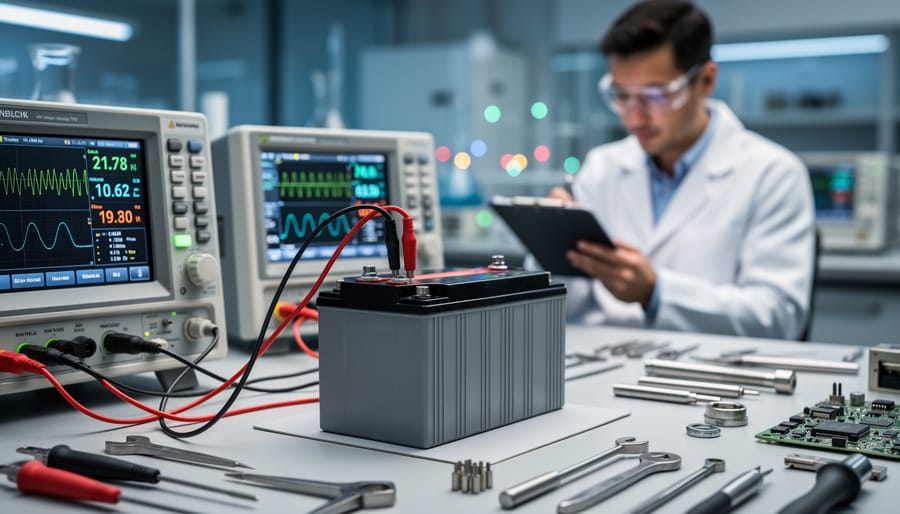
Lithium-ion batteries show how a laboratory idea becomes a grid asset, and how long that takes. In the 1970s, researchers studying intercalation chemistry found that lithium ions could slip in and out of layered materials without destroying their structure. That was pure science: a finding about how matter behaves, with no product attached.
The next step was materials research. Through the 1980s, scientists identified compounds that could store lithium at useful voltages and tested safer alternatives to reactive lithium metal. Engineers then had to solve problems the lab never raised: consistent manufacturing, thermal safety, electrode coatings, and battery management electronics. Sony commercialized the first rechargeable cells in 1991, roughly two decades after the underlying discovery.
Even then, the cells went into camcorders and phones, not power systems. Grid-scale use came later, as manufacturing volume pushed costs down and improved chemistries, better software controls, and utility demand for fast-responding storage all converged. Today, large battery installations help balance supply and demand on electricity networks.
The pattern repeats across energy: a basic finding, years of applied refinement, a small commercial niche, then gradual scaling. Each stage depends on evidence and adds new questions for science to answer.
Why the Distinction Matters for Energy Decisions
Energy debates often go wrong because people blur three separate questions: Is it scientifically established? Is it technologically feasible? Is it commercially viable? Each question has a different answer, and each calls for a different kind of evidence.
Take a claim about a new battery. The underlying science might be well supported: lab experiments show that a certain material can store charge at high density. That doesn’t mean anyone can build a durable, safe cell around it. Manufacturing at scale raises engineering problems that the original experiment never faced. And even a feasible design may fail on cost, supply of raw materials, or the price of competing options.
Once you see these layers, vague headlines get easier to read. “Scientists discover” usually signals a first step, not a product on the shelf. “Prototype demonstrated” says something about feasibility, not about price. Policy arguments follow the same logic. Disagreement over climate science is a different conversation from disagreement over which grid technology to fund or how fast a market can absorb it.
For investors, policymakers, and curious readers alike, the practical habit is simple: ask which layer a claim actually addresses, and what evidence supports that layer.
Branches and Building Blocks: The Main Fields Behind Energy Innovation
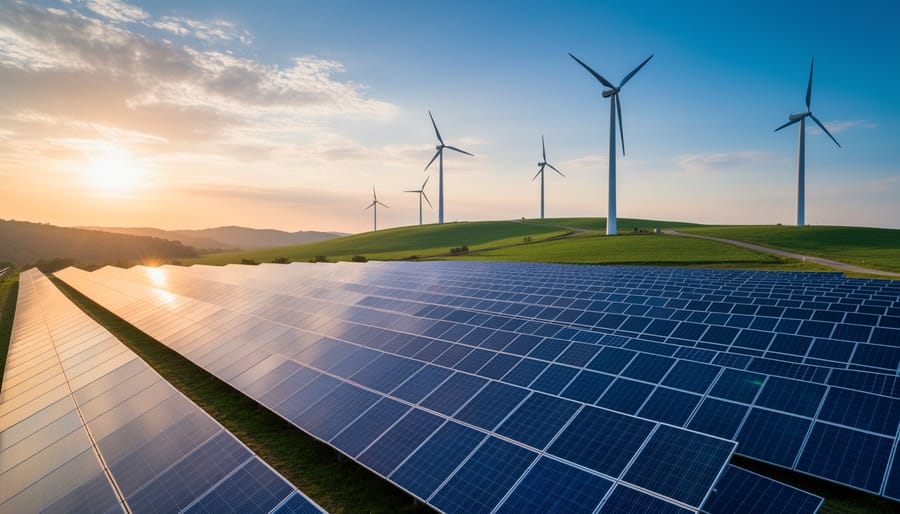
The Scientific Foundations: Physics, Chemistry, Materials, and Earth Science
Physics gives energy its rules. Thermodynamics sets the limits on how much useful work any engine or power plant can extract from heat, which is why even well-built plants lose a share of their fuel’s energy as waste heat. Electromagnetism explains how a spinning generator turns motion into electricity and how that electricity can travel along a wire.
Chemistry covers what happens at the molecular level. Combustion releases energy by breaking and forming chemical bonds in fuels, while electrochemistry describes how a battery stores and releases charge through reactions between its electrodes and electrolyte. The same logic applies to fuel cells and to the production of hydrogen.
Materials science asks which substances can do these jobs best. Semiconductors determine how efficiently a solar cell converts sunlight, and the composition of a battery electrode affects capacity, lifespan, and safety. Researchers also study how materials hold up under heat, stress, and corrosion.
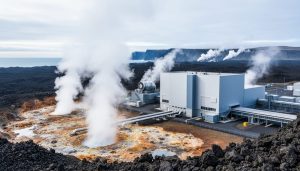
Earth science looks at the setting around all of it. Geoscience helps locate geothermal reservoirs, map wind and solar resources, and understand mineral supply, while climate and environmental science measure what energy choices do to air, water, and ecosystems.
The Technological Toolkit: Engineering, Electronics, and Digital Systems
Technology in energy is the working layer built on top of scientific understanding. At its core sits generation equipment: turbines, solar modules, generators, and reactors, each engineered to convert a natural energy source into electricity at useful scale.
Between generation and the socket, power electronics do quiet but essential work. Inverters convert the direct current from solar panels and batteries into the alternating current that grids run on, while converters and controllers regulate voltage and frequency so supply stays stable.
Storage systems, most visibly batteries but also pumped hydro and thermal storage, let operators hold energy until it is needed. Transmission and distribution infrastructure, including high-voltage lines, transformers, and substations, then carries that power across regions to homes and industry.
Increasingly, a digital layer ties everything together. Sensors measure conditions in real time, software coordinates equipment, and data analytics help operators forecast demand, spot faults early, and schedule maintenance before a failure occurs. Smart meters and grid management platforms are common examples.
None of this replaces the underlying engineering. Digital tools make existing hardware easier to monitor and operate, but they depend on sound physical design to deliver reliable results.
How Science and Technology Are Used Across the Energy Industry
Generating and Storing Power
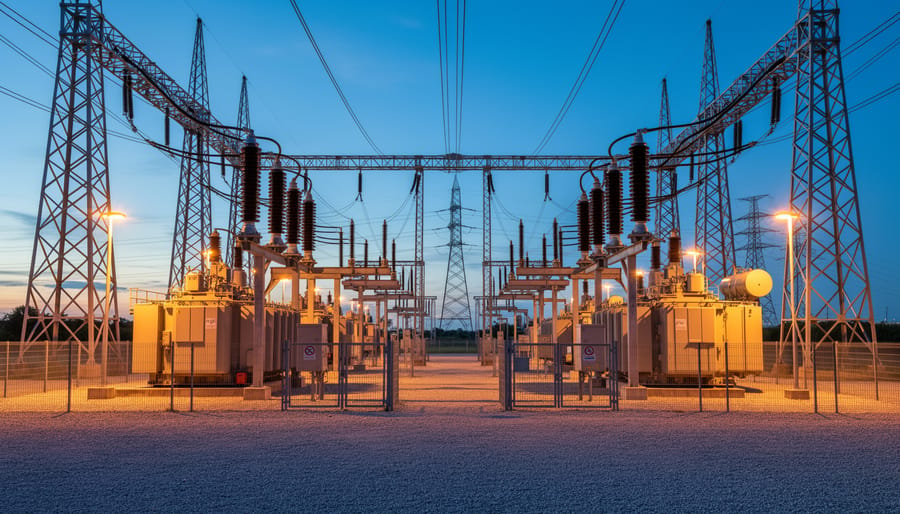
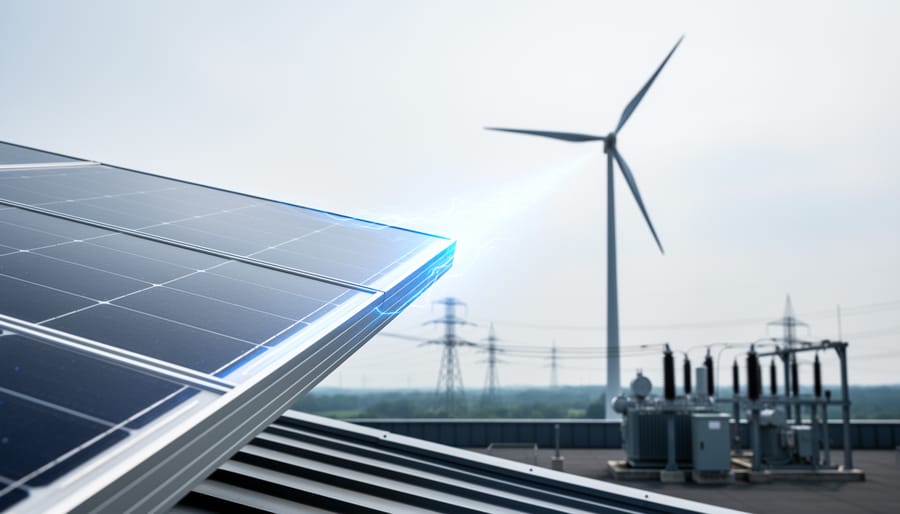
Generating power starts with a scientific principle. In a solar panel, the photovoltaic effect lets certain semiconductors release electrons when light hits them, producing current. In a wind turbine, aerodynamics shapes the blades so moving air creates lift and turns a generator. How well those blades capture the wind is the heart of wind energy efficiency.
Storage leans on chemistry. Batteries store energy in electrochemical reactions, moving ions between electrodes and releasing them on demand. Hydrogen fuel cells use a related reaction to turn stored fuel into electricity.
None of this comes free. Sunlight and wind are intermittent, so output rises and falls with the weather, which makes storage essential. Materials add another limit, since batteries and panels depend on minerals that are costly to extract and sometimes scarce.
Managing, Measuring, and Reducing Environmental Impact
Modern grids, efficiency programs, and monitoring tools sit on top of both disciplines. Science supplies the understanding: atmospheric chemistry shows which gases trap heat, and thermodynamics sets the limits on how efficient a power plant or heat pump can be. Technology turns that knowledge into practice through smart meters, satellite and ground-based sensors, and software that balances supply and demand in real time.
Environmental science also shapes the choices engineers make before anything is built. Lifecycle assessments weigh the impacts of mining materials, manufacturing equipment, and decommissioning it, which can change which design is actually the cleaner option. Policymakers lean on the same evidence when they set emissions standards or efficiency requirements.
Measurement ties it together. You can’t manage what you can’t track, so continuous monitoring and transparent accounting are what make credible GHG emissions reductions possible, as opposed to claims that sound good but can’t be verified.
Expert Perspective: Where Research and Industry Meet
Where research meets industry is where scientific findings become technology choices, and it is worth hearing directly from the people working in that space. This section is reserved for a signature expert perspective from a researcher or energy professional, ideally affiliated with a reputable university or research organization.
The goal is to capture how laboratory findings shape real engineering decisions. Examples include why a particular battery chemistry advances to pilot testing, how materials research influences the design of solar cells, or how grid scientists weigh technical feasibility against cost and policy constraints. A practitioner can explain what the evidence actually supports, where uncertainty remains, and what separates a promising result from a deployable product.
To keep this coverage accurate, the quoted insight will be added only after it has been sourced and verified with the expert and their institution. Until then, the guiding principle holds: scientific understanding sets the boundaries of what is possible, and technology is how industry works within them.
Common Questions About Science and Technology in Energy
Is technology the same as engineering?
Not quite. Technology is the broad body of tools, systems, and methods created to solve practical problems, while engineering is the discipline that designs, builds, and refines them. An engineer working on a wind turbine uses scientific knowledge to produce a piece of technology.
Which comes first, science or technology?
Neither has a fixed priority. Scientific discovery often enables new technologies, but technologies such as better instruments and sensors also make new discoveries possible. In practice, the two develop in a continuous loop.
Why does energy innovation take so long to reach consumers?
A new idea has to move from laboratory research to pilot projects and then to commercial deployment, and each stage involves testing, cost reduction, and safety review. Energy systems are also large, long-lived infrastructure, so change tends to be gradual. Materials availability and policy conditions can slow it further.
How can readers judge the reliability of energy technology claims?
Look for evidence from peer-reviewed research, universities, or established research organizations rather than marketing language alone. Check whether a claim describes a laboratory result, a pilot project, or a commercially proven product. Be cautious when a claim cites no source or promises results without stating its conditions.
Taken together, these answers point to the same idea: science and technology are distinct but inseparable, and judging energy developments well starts with knowing which of the two a claim is really about.
Science explains, and technology applies. Science gives us tested knowledge about how energy behaves, from the physics of sunlight to the chemistry inside a battery. Technology takes that knowledge and builds the panels, turbines, storage systems, and grids that people actually rely on. Neither moves far without the other: new instruments and computing power open fresh questions for researchers, and fresh findings make better devices possible.
That loop is the real story of Science and Technology in Energy, and it’s why the distinction is worth holding onto. When you can tell what is scientifically established from what is merely technically feasible or commercially viable, you’re better equipped to judge a policy claim or a product pitch.
For more evidence-backed coverage, explore our exclusive topics, subscribe to our newsletters, or follow our RSS feeds.