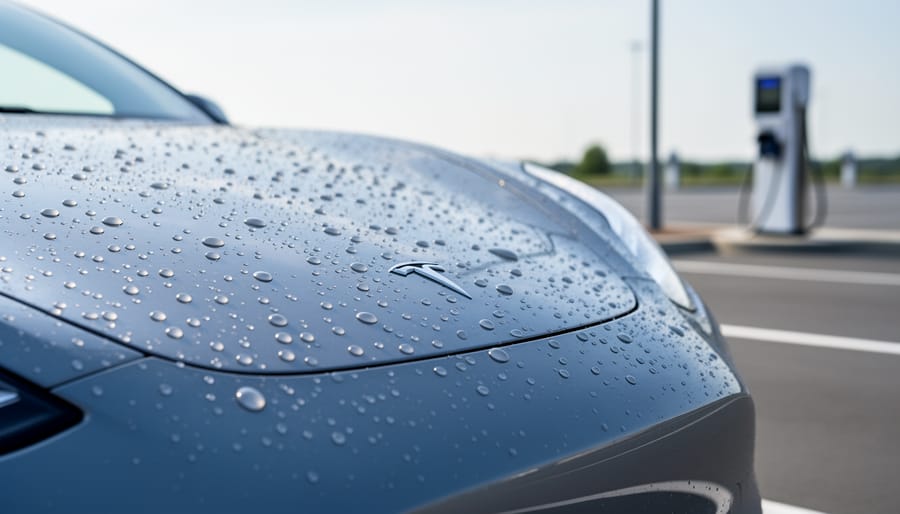
Ceramic coatings for electric vehicles are nano-structured silicon dioxide or polymer-based surface treatments that chemically bond with automotive paint to create a hydrophobic, chemically resistant protective layer measuring 2-5 microns thick. These coatings function at the molecular level by cross-linking hydroxyl groups on the paint surface with siloxane bonds, forming a semi-permanent barrier that repels water, contaminants, and UV radiation far more effectively than traditional waxes or sealants.
For EV owners in 2026, ceramic coatings address a specific challenge: modern water-based paint systems, mandated by stricter environmental regulations and favored by manufacturers for their lower carbon footprint, are more porous and susceptible to environmental damage than older solvent-based formulations. The protection matters because EVs typically represent significant long-term investments, and their aerodynamic body designs feature large, complex painted surfaces that accumulate road debris and environmental fallout.
This analysis examines the surface chemistry mechanisms that enable ceramic protection, categorizes coating formulations by polymer structure and performance characteristics, and provides evidence-backed guidance on application methods and durability expectations. We draw on materials science research and automotive engineering insights to separate marketing claims from measurable protective benefits.
What Ceramic Coatings Are and Why EVs Need Them
Ceramic coatings are liquid polymer treatments primarily composed of silicon dioxide (SiO2) nanoparticles suspended in a carrier solvent that chemically bonds to automotive paint to form a transparent, hard protective layer. Unlike carnauba wax that sits on the surface and degrades within weeks, or synthetic polymer sealants that last several months through mechanical adhesion, ceramic coatings create actual chemical bonds with the clearcoat. This fundamental difference explains why properly applied coatings can endure for years rather than requiring monthly reapplication.
- Ceramic Coating
- A silicon dioxide-based liquid treatment that forms permanent chemical bonds with automotive clearcoat, creating a hardened protective layer at the nanoscale level.
- Silica (SiO2)
- Silicon dioxide, the primary active ingredient in ceramic coatings, which forms the molecular framework that bonds to paint surfaces and creates protective properties.
- Hydrophobic Effect
- The property of a surface that causes water to bead up and roll off rather than spreading, resulting from low surface energy and specific nanostructure geometry.
- Surface Energy
- A measure of the molecular forces at a material’s surface that determine how liquids spread or bead on that surface, critical for understanding coating adhesion and water-repellent behavior.
Modern electric vehicles present specific challenges that make ceramic coating for Brisbane cars particularly valuable. Manufacturers increasingly use water-based paint formulations to reduce volatile organic compound emissions during production, aligning with sustainability goals that complement EV ownership. These eco-friendly paints, while environmentally responsible, can exhibit different porosity and chemical resistance profiles compared to traditional solvent-based systems. The harder, denser barrier formed by ceramic coatings compensates for these potential vulnerabilities.
EV owners also face unique environmental exposures. Charging stations, particularly in commercial parking areas, may expose paint to cleaning chemicals, battery electrolyte residue from other vehicles, and prolonged static positioning under harsh sunlight during multi-hour charging sessions. Ceramic coatings provide measurable resistance to acidic contaminants like bird droppings and tree sap, alkali-based cleaners, and UV radiation that would otherwise penetrate and degrade unprotected water-based clearcoats. The coating’s chemical stability and UV-blocking properties address these exact threats, making them more than cosmetic enhancements for vehicles representing significant financial investments.
The Surface Science Behind Ceramic Coating Adhesion
Surface Energy and Wetting
Surface energy governs how well a liquid ceramic coating spreads across an EV’s clearcoat. Paint surfaces with higher surface energy attract coating molecules more strongly, enabling uniform coverage. Low surface energy creates beading and uneven application, exactly what you’re trying to avoid during installation.
Contact angle measurement reveals this relationship in action. When you place a droplet of coating on properly prepared paint, it should spread to a contact angle below 30 degrees, indicating strong wetting. Contaminated surfaces show contact angles above 60 degrees, where the coating pools rather than bonds.
The clearcoat’s molecular structure matters here. Fresh automotive paint contains polar hydroxyl groups that increase surface energy, creating ideal bonding sites. These groups form hydrogen bonds with the coating’s silanol molecules, pulling them into intimate contact with the surface. Without this molecular attraction, coatings sit on top of paint rather than chemically anchoring to it.
Surface preparation directly manipulates this energy balance. Decontamination removes oils and residues that lower surface energy, while solvent wipes eliminate any remaining barriers to molecular contact. This preparation transforms the clearcoat into a high-energy surface primed for covalent bond formation during the curing process.
Chemical Bonding at the Molecular Level
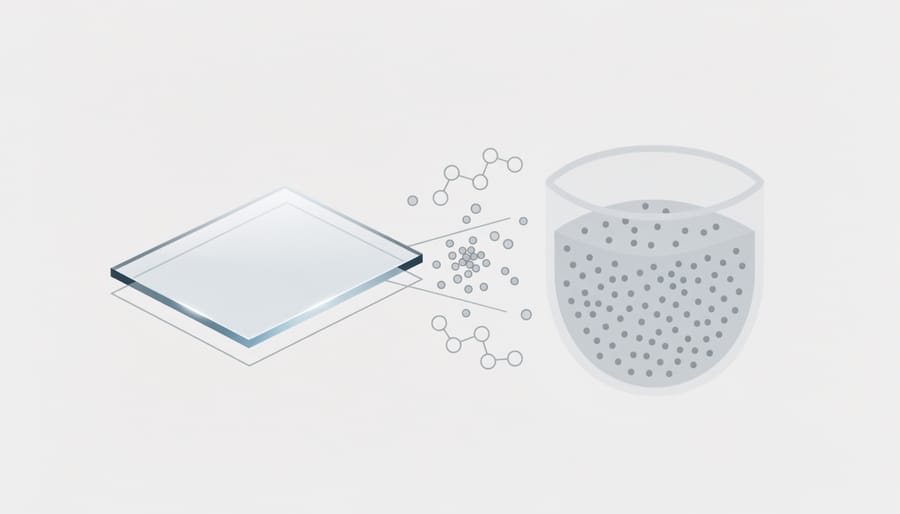
When a ceramic coating is applied to EV paint, silanol groups (Si-OH) in the liquid formulation encounter hydroxyl groups (OH) naturally present on the clearcoat surface. These functional groups initiate a condensation reaction that forms covalent Si-O-Si bonds, permanently anchoring the coating to the paint at the molecular level. This chemical bonding differs fundamentally from mechanical adhesion, the coating doesn’t simply sit on top of the clearcoat but becomes part of its molecular structure.
The curing process drives this transformation. As solvents evaporate and the coating layer consolidates, adjacent silanol groups within the coating itself also cross-link through condensation reactions. This cross-linking creates a three-dimensional siloxane network, transforming the liquid into a rigid, glass-like structure. Temperature and humidity affect curing speed: moderate warmth accelerates solvent evaporation while controlled moisture provides hydroxyl groups that complete the polymerization reactions.
Complete curing typically requires 24 to 48 hours, though surface-level hardening occurs within hours. During this window, the siloxane network achieves maximum density and hardness, reaching values between 9H and 10H on the pencil hardness scale, significantly harder than uncured automotive clearcoat.
Nanostructure Formation
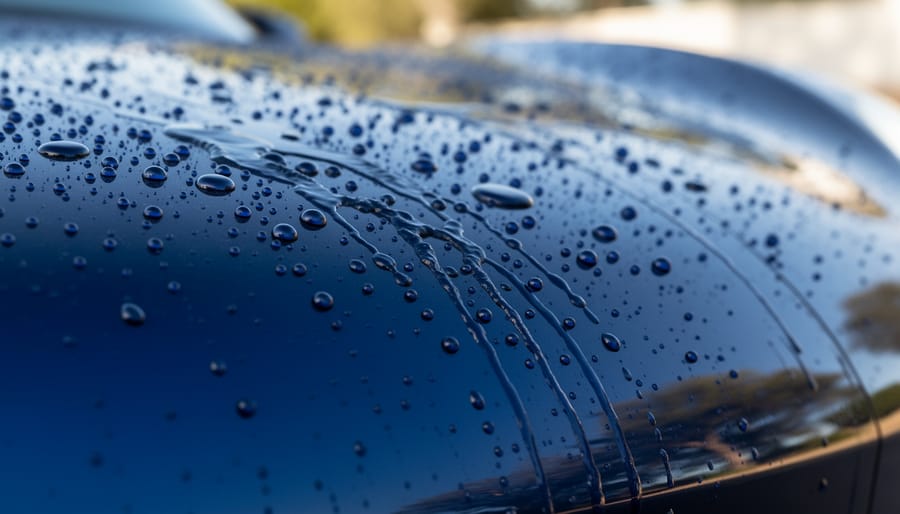
When ceramic coatings cure, they self-assemble into a network of interconnected silica nanostructures that create microscopic peaks and valleys across the paint surface. These nanoscale features, typically measuring 50-200 nanometers in height, mimic the natural architecture found on lotus leaves. The resulting texture dramatically increases the surface area while simultaneously reducing the actual contact points available for water droplets or contaminants.
This engineered roughness elevates water contact angles above 110 degrees, causing droplets to bead up into near-spherical shapes rather than spreading across the paint. As droplets roll off the tilted surface, they capture and remove dirt particles trapped in the valleys between nanostructures, the self-cleaning mechanism that keeps coated EV paint cleaner between washes. The hydrophobic effect isn’t a chemical repellent but rather a geometric phenomenon: contaminants can’t anchor properly to a surface they barely touch.
Types and Formulations of Ceramic Coatings for Automotive Use
The market offers four main categories of ceramic coatings for EV paint protection, each with distinct chemical formulations and performance characteristics that reflect different approaches to surface bonding chemistry.
Consumer-grade silicon dioxide coatings represent the most accessible entry point. These single-component formulations typically contain 70-80% SiO2 suspended in a carrier solvent, designed for straightforward application by vehicle owners. The molecular structure relies on simple silanol cross-linking to form protective bonds with paint hydroxyl groups. Most consumer products claim durability of two to three years under normal conditions, though real-world performance depends heavily on application quality and environmental exposure. Their simpler chemistry makes them more forgiving during application but limits the depth of molecular penetration compared to professional systems.
Professional-grade multi-layer systems employ a more sophisticated approach. These typically involve a primer layer that maximizes chemical bonding to the clearcoat, followed by one or two top coats that enhance hydrophobicity and gloss. The layered architecture creates a denser cross-linked network at the molecular level, similar to how nanoparticle coatings build protective barriers in energy applications. Silica content often reaches 85-90% in professional formulations, with additives that extend working time and improve leveling properties. Durability claims range from five to ten years, though this assumes proper surface preparation and controlled curing conditions. Application requires trained technicians familiar with humidity management and infrared curing equipment.
Graphene-enhanced formulations represent the newest category, incorporating graphene oxide platelets into the SiO2 matrix. The two-dimensional carbon structure theoretically provides superior scratch resistance and thermal conductivity compared to pure ceramic systems. However, independent testing on long-term durability remains limited, and the higher cost reflects both exotic materials and marketing premiums.
Hybrid polymer-ceramic blends combine silica networks with polysiloxane or polysilazane chemistry, creating flexible bonds that better accommodate paint expansion and contraction. These formulations sacrifice some hardness for improved crack resistance, making them suitable for daily-driven EVs in extreme climates. The polymer component shares characteristics with nanoparticle ink technologies used in printable electronics, where flexibility and adhesion must coexist. Typical durability falls between consumer and professional ceramic-only products, at three to five years.
How Ceramic Coatings Protect Modern EV Paint
Once the ceramic coating forms its molecular bond with the clearcoat, it delivers a suite of protective mechanisms that directly counter the environmental threats facing modern EV paint. These protections stem from the coating’s chemical composition and nanoscale structure, addressing vulnerabilities inherent in water-based automotive finishes.
UV radiation poses one of the most persistent threats to EV paint longevity. Silicon dioxide coatings absorb and scatter UV photons before they penetrate the clearcoat, preventing the photo-oxidation reactions that cause fading and chalking. This UV stability is particularly valuable for water-based paints, which typically contain fewer volatile organic compounds and rely on different binder chemistries that can be more susceptible to photodegradation than traditional solvent-based formulations.
The coating’s chemical inertness provides a barrier against acidic contaminants. Bird droppings (pH 3-4), tree sap, and acid rain contain compounds that etch unprotected paint by breaking down ester linkages in the clearcoat polymer network. The ceramic layer’s Si-O-Si bonds resist these acidic attacks, preventing permanent etching that would otherwise require paint correction.
Key protective benefits include:
- UV stability through photon absorption and scattering that prevents clearcoat oxidation
- Chemical inertness with pH resistance from 2 to 12, blocking acidic and alkaline contaminants
- Surface hardness rated at 9H on the pencil hardness scale, resisting fine scratches and swirl marks
- Thermal expansion compatibility with automotive clearcoats across temperature ranges from -40°C to 100°C
Scratch resistance operates at the microscopic level. While ceramic coatings won’t prevent rock chips or key scratches, their 9H pencil hardness rating means they resist the fine abrasions that cause swirl marks during washing. The rigid silica network distributes impact forces across a larger surface area, reducing the depth of micro-scratches.
Thermal stability matters for EVs that charge outdoors in temperature extremes. The coating’s thermal expansion coefficient closely matches that of automotive clearcoats, preventing the stress cracks that can occur when dissimilar materials expand and contract at different rates. This property also supports efficient heat transfer from the paint surface during both summer heat and rapid temperature changes, maintaining the coating’s bond integrity over years of exposure.
Application Process and Surface Preparation Requirements
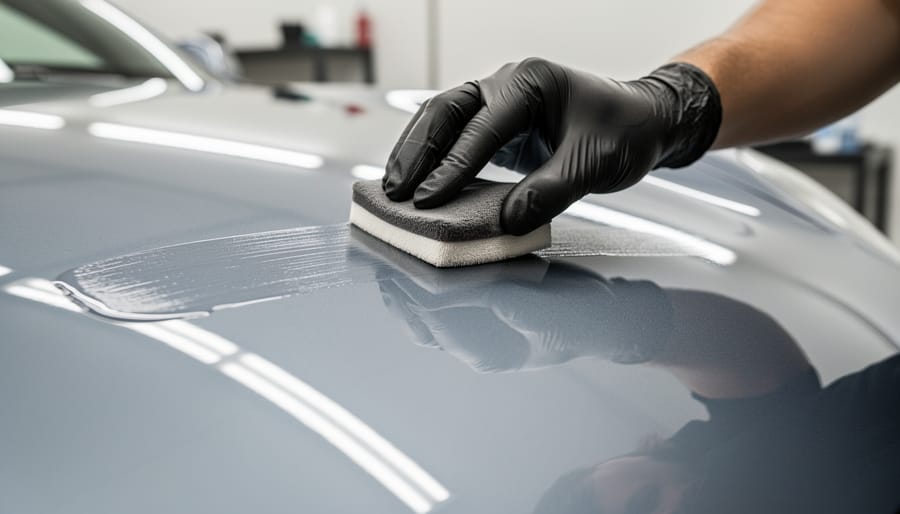
Applying a ceramic coating to EV paint demands meticulous surface preparation, the coating can only bond as well as the surface allows. Skip these steps, and even the most advanced formulation will fail prematurely.
Start with thorough decontamination. Wash the vehicle using pH-neutral automotive shampoo, then follow with a clay bar treatment to remove embedded contaminants like industrial fallout, tar, and tree sap that washing alone cannot eliminate. These particles sit on the clearcoat surface, preventing the coating from achieving full molecular contact with the paint. For EVs with metallic paint, use an iron remover spray to dissolve brake dust particles chemically bonded to the surface. You’ll see a purple reaction as the solution chelates iron compounds, which rinse away cleanly.
Paint correction comes next. This critical step removes swirl marks, scratches, and oxidation that would otherwise be sealed beneath the coating. Using a dual-action polisher with progressively finer compounds, level the clearcoat to create a pristine surface. For new EVs with factory-fresh paint, a single-stage polish typically suffices. Older vehicles may require multi-stage correction. The goal is a defect-free surface that maximizes light reflection and provides optimal adhesion sites for silanol bonding.
Panel preparation immediately precedes coating application. Wipe down each section with 70-percent isopropyl alcohol or a dedicated panel prep solution to remove polishing oils and residual contaminants. This step ensures nothing interferes with the hydroxyl groups on the clearcoat that facilitate chemical bonding. Work in a controlled environment, ideally between 15 and 25 degrees Celsius with relative humidity below 60 percent. Temperature and moisture dramatically affect curing kinetics.
Apply the coating in small sections using a microfiber applicator pad wrapped around a foam block. Spread the product in straight, overlapping lines rather than circular motions, using minimal pressure. Most formulations flash within 30 to 60 seconds, indicated by a rainbow effect on the surface. Buff immediately with a clean microfiber towel using light, level strokes to remove excess product and ensure uniform thickness.
Curing requires patience. Initial cross-linking occurs within hours, but full molecular bonding takes seven to fourteen days depending on formulation chemistry. During this period, keep the vehicle dry and avoid washing. Temperature stability accelerates curing, parking in a climate-controlled garage produces superior results compared to outdoor exposure with temperature swings.
Performance Testing and Real-World Durability
Standardized laboratory testing provides quantifiable metrics for comparing ceramic coating performance across different formulations. Contact angle measurement serves as the primary indicator of hydrophobicity, with quality coatings typically maintaining angles above 110 degrees when fresh. Researchers use goniometers to track how these angles degrade over time under controlled exposure conditions. A coating that drops below 90 degrees has lost its water-repelling effectiveness.
Abrasion resistance testing follows ASTM D4060 protocols using Taber abraders, which apply calibrated rotational friction to coated panels. Professional-grade ceramic coatings withstand 500 to 1,000 cycles before showing measurable thickness loss, while consumer products may degrade after 200 cycles. These numbers translate roughly to years of hand washing versus automated brush washes.
Chemical resistance trials expose coated surfaces to acidic compounds (pH 3-4 simulating bird droppings), alkaline solutions (pH 10-12 mimicking cleaning chemicals), and solvents for defined periods. Independent automotive research facilities measure color change, gloss retention, and coating integrity after exposure. University studies from polymer science departments have documented that cross-linked siloxane networks in premium coatings resist chemical attack significantly better than linear polymer chains found in hybrid formulations.
Accelerated weathering chambers subject coated panels to concentrated UV radiation, temperature cycling between -20°C and 80°C, and humidity fluctuations that compress years of outdoor exposure into weeks. QUV testing following ISO 4892 standards helps predict real-world durability for EVs parked outdoors in varied climates. Independent third-party verification from institutions like the Fraunhofer Institute or SAE International carries more weight than manufacturer claims alone, providing buyers with evidence-based performance expectations rather than marketing promises.
Common Questions About Ceramic Coatings on EVs
Do ceramic coatings eliminate the need for washing?
No, ceramic coatings reduce how often dirt adheres and make washing easier, but they don’t prevent contamination entirely. Regular washing remains necessary to remove accumulated pollutants, road grime, and charging station residue that can degrade coating performance over time.
Can ceramic coatings be applied to matte paint finishes?
Yes, but you must use formulations specifically designed for matte surfaces. Standard ceramic coatings will add unwanted gloss to matte paint, permanently altering its appearance, so always verify the product is labeled matte-safe before application.
How do ceramic coatings interact with paint protection film?
Ceramic coatings work well over PPF and enhance its hydrophobic properties and gloss retention. Apply the coating after PPF installation to maximize both protective layers, though some installers recommend waiting 7-10 days for the film’s adhesive to fully cure.
Are ceramic coatings worth the cost compared to traditional wax?
For EVs kept outdoors or in harsh climates, the 2-5 year durability and superior chemical resistance typically justify the higher upfront cost versus waxes that require reapplication every few months. The cost-benefit calculation improves if you keep your vehicle long-term and value reduced maintenance effort.
Do temperature extremes affect coating performance on EVs charged outdoors?
Quality ceramic coatings maintain protective properties across wide temperature ranges (-40°C to 250°C), far exceeding what outdoor-charged EVs experience. However, curing in extreme cold or heat can compromise initial bonding, so application under moderate conditions yields better long-term adhesion.
Beyond these practical concerns, many EV owners ask whether ceramic coatings interfere with automated car wash systems. While the coating itself tolerates mechanical brushes, the harsh chemicals and high-pH soaps used in some automated washes can gradually degrade the hydrophobic layer. Touchless or hand washing preserves coating longevity better than friction-based systems, particularly during the first month after application when cross-linking continues.
Ceramic coatings represent a practical application of surface science that addresses the specific protective needs of modern electric vehicle paint. At the molecular level, covalent Si-O bonds between silanol groups and hydroxyl groups on clearcoat surfaces create durable chemical adhesion that waxes and sealants cannot match. The manipulation of surface energy through nanostructure engineering produces hydrophobic behavior and self-cleaning properties, while the resulting silica network provides measurable resistance against UV degradation, chemical etching, and minor abrasion.
For water-based EV paint formulations, which prioritize environmental compliance over maximum chemical resistance, ceramic coatings fill a genuine protection gap. The science isn’t complicated: properly applied coatings form nanoscale barriers that shield vulnerable paint layers from the oxidative stress, contaminant bonding, and thermal cycling that accelerate finish degradation.
Research institutions and coating manufacturers continue developing formulations with enhanced properties. Self-healing polymers that reform bonds after minor damage, graphene-reinforced matrices offering improved thermal management, and multi-functional coatings combining protection with anti-microbial or anti-static properties represent the next evolution. These advances build on established surface chemistry principles while pushing durability claims toward the decade mark, making ceramic protection increasingly practical for long-term EV ownership.