Cutting greenhouse gas emissions to net zero requires working on four fronts at once: decarbonizing energy supply, reducing demand, protecting and restoring land, and removing carbon that’s already in the atmosphere. No single lever is enough. Energy production alone accounts for roughly three quarters of global greenhouse gas emissions, so clean electricity, paired with electrification of transport, buildings, and industry, does most of the heavy lifting. Efficiency and shifts in how we consume energy, food, and materials trim the total that supply-side solutions must cover. Forests, soils, and wetlands hold large carbon stocks that are cheap to protect and costly to lose. Engineered carbon removal, from direct air capture to enhanced rock weathering, is still small in scale but is expected to cover the hardest-to-abate residual emissions, from aviation to cement.
The strategies differ sharply in cost, maturity, and permanence. Solar and wind are now among the cheapest sources of new electricity in many regions, while carbon capture and storage remains expensive and unevenly deployed. Land-based approaches can be fast but are vulnerable to fire, drought, and policy reversal. This article sorts the main options by sector, weighs what each can realistically deliver, and examines the policy and economic conditions that decide whether they scale.
Understanding the Problem Mitigation Must Solve
Mitigation vs. Adaptation: A Quick Distinction
Mitigation and adaptation answer two different questions. Mitigation asks how we limit climate change in the first place, by cutting greenhouse gases at the source or pulling carbon back out of the air. Adaptation asks how we cope with the changes already underway, through measures like sea walls, drought-tolerant crops, and heat-resilient cities.
Both are necessary. Adaptation protects people from impacts that are already locked in, but it has limits, and its costs climb the more the planet warms. Mitigation is what keeps those impacts from growing worse over time.
This article concentrates on mitigation. Without deep GHG emissions reductions adaptation becomes a race against an ever-faster-moving problem. Removing carbon from the atmosphere comes next, as a complement rather than a substitute, so the sections that follow weigh each approach on the evidence.
Where Emissions Come From and Why It Matters
Greenhouse gas emissions don’t come from one place, and that’s the first thing to grasp when judging any mitigation strategy. The IPCC’s assessments group emissions into a handful of sectors: energy supply (electricity and heat), industry, transport, buildings, and agriculture, forestry, and other land use. Energy supply is consistently the largest contributor, with industry and transport following. Agriculture and land use form a distinct category because they involve methane and nitrous oxide as well as carbon dioxide. For current percentages, consult the latest IPCC and IEA reports directly, since shares shift as data are revised.
The sector breakdown matters because each source has a different physical cause, so each needs a different fix. Electricity generation emits carbon dioxide mainly from burning coal and gas, which means the remedy is swapping in low-carbon generation. That path is relatively well understood and increasingly affordable.
Steel and cement are another story. Cement emits carbon dioxide not just from the energy used to heat kilns but from the chemical reaction that turns limestone into clinker. Cleaner electricity alone can’t remove those process emissions. Steel faces a related problem: conventional blast furnaces use coal as a chemical reducing agent, not merely as fuel.
Livestock presents a third pattern entirely. Cattle and sheep produce methane through digestion, and manure and fertilizer add nitrous oxide. Because methane is a potent but short-lived gas, tackling it calls for feed changes, herd management, and dietary shifts rather than new power plants.
A strategy that works brilliantly for one source can be nearly irrelevant to another. Putting solar panels on a grid does nothing for kiln chemistry, and carbon capture on a cement plant does nothing for a dairy herd. Matching the tool to the source is the foundation for everything that follows.
Cleaning Up Energy: The Biggest Lever
Scaling Solar, Wind, and Other Renewables
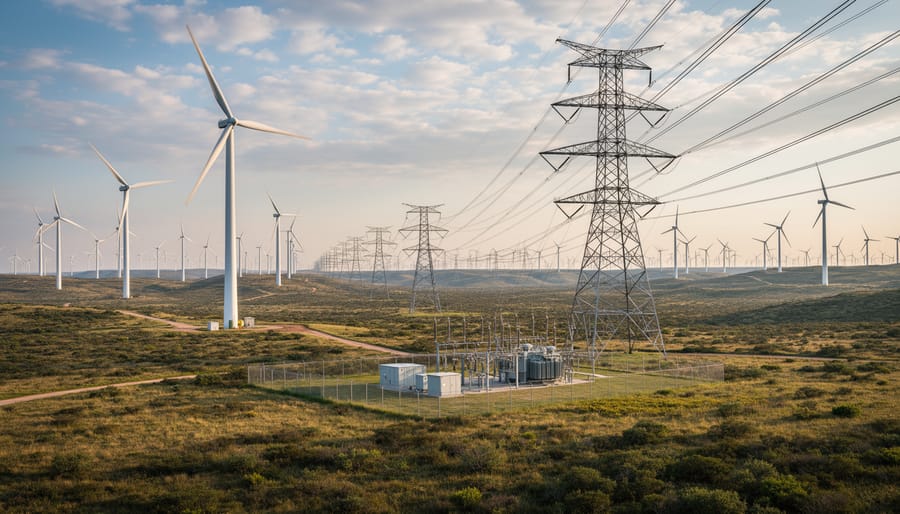
Solar and wind cut emissions by displacing the electricity that fossil plants would otherwise generate. Because renewables have near-zero fuel costs, grid operators dispatch them first, which pushes the most expensive and usually most carbon-intensive generators off the system. Every megawatt-hour of solar or wind delivered is a megawatt-hour that coal or gas did not have to supply.
The economics have shifted considerably. Analyses from the International Renewable Energy Agency and the IEA document steep declines in the cost of solar panels and onshore wind turbines over the past decade, and in many regions new renewable capacity is now cheaper to build than new fossil capacity. Questions about whether such turbines deliver on their promise are common, and a closer look at whether wind energy efficient designs have improved shows how much turbine performance has advanced alongside falling costs.
Cheap generation does not remove the practical obstacles. Output from solar and wind varies with weather and time of day, so it must be paired with other resources to keep supply steady. Many projects wait years in grid connection queues because transmission and interconnection studies have not kept pace with developer demand. Siting brings its own friction: land use, local opposition, permitting timelines, and effects on wildlife can all slow construction.
Materials supply is a further constraint. Panels, turbines, and batteries depend on minerals such as silicon, copper, lithium, and rare earth elements, and mining and processing are concentrated in a small number of countries. Researchers point to recycling, diversified sourcing, and design changes as ways to ease that pressure.
None of these constraints erase the case for renewables. They define the work required to scale them: building out grids, speeding permitting, and securing reliable supply chains.
Storage, Grids, and Flexibility
Solar and wind output follows weather, not demand, so a grid built around them needs ways to shift energy across time and space. Four tools do most of that work, and each has limits.
Batteries, mostly lithium-ion, excel at short-duration balancing. They can respond in milliseconds and smooth the daily solar peak into the evening. The constraint is duration. Most installed systems discharge for two to four hours, which handles daily swings but not a week of low wind. Research on long-duration storage, including flow batteries and thermal systems, is promising, but deployment remains early.
Pumped hydro is the most mature option, accounting for the large majority of the world’s grid storage capacity according to the IEA. It stores energy for many hours at low cost per unit. Its limit is geography: it needs suitable terrain, water, and years of permitting and construction.
Demand response shifts consumption rather than storing it. Smart thermostats, flexible industrial loads, and managed electric vehicle charging can move demand toward hours of abundant supply. It is cheap and fast to deploy, yet it only moves a limited share of total load, and it depends on pricing signals and consumer participation.
Expanded transmission links regions with different weather, so a calm area can import from a windy one. Studies of regional grids consistently find that interconnection lowers the storage needed. The bottleneck is rarely engineering. It is permitting, cost allocation across jurisdictions, and local opposition, which can stretch projects over a decade.
No single tool solves reliability alone. Research on high-renewable systems points to portfolios, with each option covering the timescale where it is strongest.
The Role of Nuclear, Hydro, and Geothermal
Firm low-carbon sources matter because they produce power on demand, regardless of weather or time of day. Nuclear, hydro, and geothermal all have low lifecycle emissions, and published assessments such as those from the IPCC place them among the lowest-emitting generation options per kilowatt-hour. Their value lies less in replacing wind and solar than in covering the hours when those resources fall short.
Each comes with distinct trade-offs. Nuclear plants run at very high capacity factors and occupy little land, but recent projects in several countries have faced cost overruns and construction timelines stretching a decade or more. Waste management and public acceptance add further complexity, though operating safety records are strong by most comparative measures.
Hydropower is the largest existing source of low-carbon electricity worldwide, and reservoirs can double as storage. The best sites in many regions are already developed, however, and output can swing with drought and changing rainfall. Reservoirs also alter river ecosystems and can emit methane in some settings. For a closer look at the evidence, see this analysis of hydropower reliability.
Geothermal delivers steady baseload output with a small land footprint, but conventional projects depend on specific geology, which limits where they can be built. Drilling costs and exploration risk remain barriers, and enhanced approaches are still scaling up. Readers new to the technology can start with how geothermal works.
Taken together, these sources reduce how much storage and transmission a high-renewable grid needs. They also tend to be slower and more capital-intensive to build, which is why most scenarios treat them as complements to variable renewables rather than substitutes.
Efficiency and Electrification in Buildings, Transport, and Industry
Buildings and Transport
Buildings and transport are where electrification pays off most visibly, because the technologies are commercially mature and the efficiency gains compound.
Heat pumps are the central building technology. By moving heat rather than generating it, they typically deliver three or more units of heat per unit of electricity consumed, which is why peer-reviewed analyses and IEA assessments find them cutting heating emissions substantially compared with gas boilers, even on grids that still burn some fossil fuel. The benefit grows as the grid cleans up. Insulation and airtightness upgrades work alongside them: reducing heat demand lets a smaller, cheaper heat pump do the job and lowers peak load on the grid. Building codes and performance standards matter because buildings last for decades, so a poorly insulated structure locks in high energy use long after construction.
In transport, lifecycle studies are the right lens. Manufacturing a battery electric vehicle generates more emissions upfront than building a conventional car, largely due to battery production. Over a typical vehicle lifetime, though, multiple peer-reviewed analyses find battery electric vehicles emit markedly less in total, with the margin depending on how clean the local electricity supply is and how long the car is driven.
Electric vehicles are only part of the answer. Public transit, cycling infrastructure, and denser land use reduce the number of vehicle kilometres traveled at all, which cuts emissions without any material demands for batteries. Charging infrastructure is the practical bottleneck: reliable public chargers, home charging access for renters and apartment residents, and grid upgrades to handle the added demand all determine whether adoption can scale. The strongest results come from pairing vehicle electrification with mobility planning rather than relying on either alone.
Hard-to-Abate Industry
Steel, cement, chemicals, shipping, and aviation share a stubborn trait: their emissions don’t come only from burning fuel for electricity. Cement releases CO2 chemically when limestone is heated, so cleaner power alone can’t fix it. Steelmaking relies on coal as a chemical reducing agent, not just an energy source. Ships and aircraft need dense, portable fuel that batteries can’t yet supply over long distances. Add asset lifespans of several decades and thin margins, and capital turnover slows to a crawl.
The options under development vary widely in maturity, as the table below shows.
| Sector | Leading options | Main barrier |
|---|---|---|
| Steel | Hydrogen-based direct reduction, electric arc furnaces with scrap | Clean hydrogen supply and cost |
| Cement | Clinker substitutes, carbon capture on kilns | Process CO2 cannot be avoided by switching fuels |
| Chemicals | Green hydrogen feedstock, electrified heat | Retrofitting complex, integrated plants |
| Shipping | Ammonia, methanol, biofuels | Fuel availability and engine and bunkering infrastructure |
| Aviation | Sustainable aviation fuels, efficiency gains | Limited feedstock and high fuel premiums |
Technology readiness is uneven. Electrifying low- and medium-temperature industrial heat, using industrial heat pumps and electric boilers, is commercially available today. Electric arc furnaces already produce a significant share of steel from recycled scrap. By contrast, hydrogen-based steelmaking is in demonstration and early commercial stages, and its climate benefit depends entirely on how the hydrogen is produced. Green hydrogen made from renewable electricity remains costly and scarce.
Process changes often deliver the quickest gains. Reducing the clinker content of cement, improving material efficiency, and designing products that use less steel all cut emissions without waiting for new fuels. Carbon capture is likely to matter for cement, since the chemical emissions have few alternatives, though deployment at scale is still limited.
The honest summary: some tools are ready now, others are years from broad commercial use, and policy support will largely determine how fast the gap closes.
Land, Food, and Nature-Based Solutions

Agriculture, forestry, and other land uses account for roughly a fifth to a quarter of global greenhouse gas emissions, according to IPCC assessments. That makes land a major lever, and one with a distinct emissions profile: methane and nitrous oxide matter as much as carbon dioxide.
Start with agriculture. Ruminant livestock produce methane through digestion, and flooded rice paddies emit it as organic matter decomposes without oxygen. Research on feed additives, improved herd management, and alternate wetting and drying of rice fields shows meaningful methane reductions, though results vary by region and farm system. Because methane breaks down in the atmosphere within roughly a decade, cutting it delivers faster near-term cooling than most carbon dioxide measures. Reducing nitrogen fertilizer overuse also trims nitrous oxide, a long-lived and potent gas.
Food waste is a quieter opportunity. UN estimates suggest around a third of food produced is lost or wasted, and every discarded meal carries the emissions of growing, transporting, and refrigerating it, plus methane if it rots in a landfill. Fixing storage losses in developing regions and household waste in wealthier ones requires different interventions, but both reduce pressure on land.
Protecting existing ecosystems often outperforms planting new ones. Intact forests, peatlands, mangroves, and wetlands hold enormous carbon stocks, and releasing them is fast while rebuilding them takes decades or centuries. Restoring degraded land can pull carbon back down and improve soil, but sequestration rates depend on climate, species, and management.
Three cautions apply here. Permanence is the first: stored carbon can return to the atmosphere through fire, drought, pests, or policy reversals. Measurement is the second, since estimating carbon in soils and standing trees involves real uncertainty and requires satellite data, field sampling, and independent verification. The third is overstated offsets. Credits can fail if they pay to protect forests that were never under threat, or if protection simply shifts logging elsewhere. Offsets are better treated as a complement to emission cuts than a substitute for them.
The co-benefits are substantial. Wetlands filter and store water, buffer floods, and shelter wildlife. Restored forests and healthier soils support biodiversity and improve water retention, which strengthens resilience while the climate benefit accrues.
Carbon Removal and Capture: Promise and Limits

Carbon removal covers a family of approaches that pull carbon dioxide out of the atmosphere or capture it before release, then store it for the long term. Carbon capture and storage (CCS) intercepts CO2 at a power plant or factory and injects it into deep geological formations. Direct air capture (DAC) uses chemical processes to extract CO2 from ambient air. Bioenergy with carbon capture and storage (BECCS) burns or ferments plant material for energy, then captures and stores the resulting emissions. Enhanced weathering spreads crushed silicate rocks on land or in the ocean to speed up natural mineral reactions that bind CO2.
Scientific assessments are consistent on the role of removal: it complements deep emission cuts rather than replacing them. The IPCC’s scenarios that limit warming to 1.5°C generally include some carbon removal, mainly to offset residual emissions from sectors that are hardest to decarbonize. They do not treat it as a reason to delay reductions.
Pros
- It can address residual emissions from sectors such as aviation, cement, and agriculture that are difficult to eliminate.
- Geological storage can hold CO2 for very long timescales when sites are well selected and monitored.
- CCS can reduce emissions from existing industrial facilities without replacing them.
Cons
- Current removal capacity is small compared with annual global emissions.
- DAC and CCS are energy-intensive, so their net benefit depends on a clean power supply.
- Costs remain high relative to many emission-reduction options.
- BECCS at scale raises concerns about land use, water, and competition with food production.
Open questions remain about measurement, permanence, and verification, particularly for enhanced weathering, where field evidence is still limited. Costs and energy requirements for DAC are also uncertain at scale, because few large facilities exist to supply real-world data. For now, the published evidence supports treating removal as a targeted tool, not a substitute for cutting emissions at the source.

Policy and Economics: What Makes Strategies Work
Technology alone does not cut emissions. Policy decides whether a cleaner option becomes the cheaper, easier, or required one. Research on emission reducing measures consistently finds that the tools work best when they are combined rather than used alone.
Carbon pricing, through taxes or cap-and-trade systems, puts a cost on emissions and lets businesses find the cheapest way to cut them. Economists favor it for that efficiency. But price signals are often too weak or too uncertain to drive investment in capital-heavy projects like industrial retrofits, and the political risk of raising prices is real.
Regulations and standards fill that gap. Vehicle efficiency rules, building codes, and clean electricity requirements create predictable demand for low-carbon products. They tend to be less economically elegant than a carbon price but often more reliable, since they don’t depend on market behavior.
Subsidies and public procurement help new technologies get past the early, expensive stage. Government purchasing and production incentives have been tied to the cost declines seen in solar, wind, and batteries. The risk is paying for deployment that would have happened anyway, so design and review matter.
International agreements, such as the Paris Agreement, set shared goals and reporting norms, though enforcement remains largely voluntary.
Equity deserves equal attention. Carbon pricing can fall hardest on lower-income households unless revenues are returned through rebates or targeted support. A just transition means helping workers and communities tied to fossil fuel industries through retraining, wage support, and regional investment. Without it, policies face resistance and risk leaving vulnerable communities behind.
How to Evaluate a Mitigation Claim
Announcements about emissions cuts arrive constantly, and their quality varies enormously. A pledge to reach zero emissions can mean a verified, near-total elimination of greenhouse gases, or it can mean a slogan backed by accounting choices that shrink the number without shrinking the pollution. The difference lies in the details, and a consistent routine for checking them is the best defense.
Work through any claim with these steps:
- Identify the baseline. Find the year or projected scenario the reduction is measured against, and check whether it was chosen because it makes the cut look larger.
- Test for additionality. Ask whether the reduction would have happened anyway because of falling technology costs or existing regulation, or whether the pledge actually caused it.
- Check the boundaries. Confirm that lifecycle and supply-chain emissions are included, not only the direct emissions from the organization’s own operations.
- Separate cuts from offsets. Look at how much of the claimed reduction comes from avoiding emissions and how much relies on credits, and whether those credits address permanence.
- Look for interim targets. A distant goal with no near-term milestones is hard to hold anyone to.
- Demand independent verification. Seek third-party audits or peer-reviewed analysis rather than self-reported figures.
A claim that survives all six checks is rare, but it is worth trusting. One that fails the first or the last deserves skepticism, however polished the announcement. Applying the same scrutiny to every pledge, whether from a corporation or a government, keeps the focus on measured results instead of intentions.
Common Questions About Climate Change Mitigation
Does individual action matter?
It does, but unevenly. Personal choices such as flying less, eating fewer high-emission foods, improving home efficiency, and switching to an electric vehicle or heat pump add up, and the IPCC’s demand-side assessments point to large potential from changes in lifestyle and consumption. Yet the biggest cuts come from systems: electricity grids, building codes, industrial standards. Individual action works best when it also shapes demand for those systems, through voting, purchasing, and workplace decisions.
Can renewables power the whole grid?
Research suggests high shares are technically feasible. Studies from national laboratories and universities, including work from the U.S. National Renewable Energy Laboratory, have modeled grids with very large wind and solar contributions. The caveats are real, though. Reliability at the highest shares depends on storage, expanded transmission, demand flexibility, and often some firm low-carbon capacity such as hydro, geothermal, or nuclear. The open question is less “whether” than “how fast and at what system cost.”
Does mitigation hurt economic growth?
The evidence points to modest costs that vary by policy design, and they are often outweighed by avoided damages and co-benefits such as cleaner air. IPCC assessments find that ambitious mitigation pathways are compatible with continued growth, though costs and benefits fall unevenly across regions, sectors, and workers. That is why a just transition matters. It is also worth noting that cost estimates depend heavily on assumptions about technology progress and policy timing, so figures from different models are not directly interchangeable.
Are carbon offsets a valid shortcut?
Only when they are verified, additional, and durable. Many offset projects have faced scrutiny over overstated claims, so reducing emissions directly should come first, with offsets reserved for what remains.
No single strategy gets us to net-zero emissions on its own. The evidence points to a portfolio: decarbonizing electricity and scaling renewables, cutting waste through efficiency, electrifying transport and buildings, protecting and restoring land, and reserving engineered carbon removal for the residual emissions that are hardest to eliminate. Each lever has limits, whether in grid integration, industrial technology readiness, or the permanence of stored carbon. The largest gains come from pursuing them together and matching each to the emissions source it suits best.
Just as important, none of it counts without credible measurement. Clear baselines, additionality, full lifecycle accounting, and independent verification separate real reductions from pledges that look good on paper. Policy gives these technical options their force, but only when it is built to be both effective and fair to the workers and communities most affected.
The research behind these strategies keeps evolving, and so does our coverage of it. To keep up with new findings, expert interviews, and evidence-backed analysis, explore our related topics on environmental impact and renewable energy, and subscribe to our newsletters or RSS feeds. We’ll continue reporting on what the science shows, and what it doesn’t, as the work of cutting emissions moves forward.