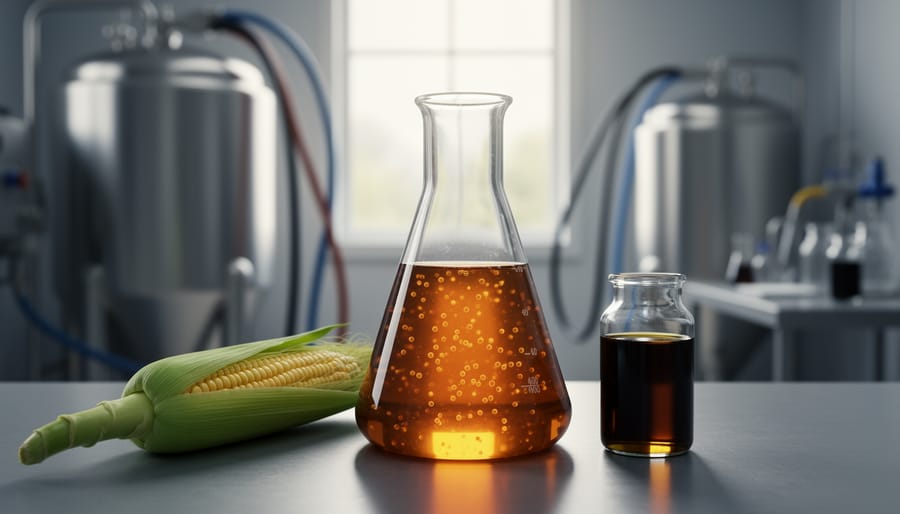
Every gallon of biofuel represents a fundamental reversal of nature’s energy cycle. Where fossil fuels took millions of years to form from ancient organic matter, biofuels compress that same chemical transformation into months or even days. The process hinges on breaking down plant sugars, agricultural waste, or algae into energy-dense compounds that can power vehicles, generate electricity, or heat homes.
The mechanics are straightforward: organisms store solar energy as chemical bonds in carbohydrates, lipids, and proteins. Biofuel production liberates that stored energy by breaking these complex molecules into simpler forms. Ethanol, the most common biofuel, emerges when yeast ferments corn or sugarcane sugars, producing the same alcohol found in beverages but destined for fuel tanks instead of glasses. Biodiesel takes a different path, extracting oils from soybeans, palm, or waste cooking grease and chemically converting them through transesterification into a diesel substitute.
Recent advances in bacterial biofuel production have shifted the conversation from traditional crops to engineered microorganisms that consume agricultural waste, turning cellulose from corn stalks or switchgrass into fuel. Scientists have modified bacteria like E. coli and cyanobacteria to produce hydrocarbons that chemically mirror petroleum-based fuels. These microbes essentially function as living refineries, metabolizing sugars and excreting fuel molecules.
The efficiency of this conversion determines whether biofuels can genuinely compete with fossil fuels. Current bacterial systems in 2026 achieve conversion rates approaching 30% of theoretical maximums, with commercial-scale facilities processing thousands of tons of biomass daily. Understanding these mechanisms reveals both the promise and the practical constraints of displacing petroleum with renewable alternatives.
The Science Behind How Biofuel Works
Energy Storage in Biological Materials
Plants and other living organisms capture sunlight and lock that energy inside carbon-hydrogen bonds, the same bonds that make fossil fuels burn. Through photosynthesis, plants convert solar radiation into glucose, a simple sugar where each C-H bond holds roughly 99 kilocalories per mole of stored energy. These molecules then combine into more complex carbohydrates like cellulose and lignin, creating dense energy reserves in wood, crop stalks, and algae.
When biomass is converted to energy those bonds break and release their stored power as heat or electricity. The chemistry mirrors petroleum combustion: carbon and hydrogen atoms react with oxygen, producing carbon dioxide, water, and usable energy. A kilogram of dry wood releases about 16 megajoules, enough to boil 38 litres of water, because its molecular structure packs concentrated chemical potential.
This is why biomass works as fuel. The carbon chains inside dead plant matter or bacterial cells aren’t just waste; they’re batteries charged by biology, ready to power engines or generate heat the moment you break their bonds.
Converting Chemical Energy to Usable Fuel
The conversion of biological energy into usable fuel requires breaking the molecular bonds within organic compounds and reorganizing those atoms into fuel molecules compatible with engines and combustion systems. Understanding how biofuel works at this chemical level reveals why certain processes yield superior fuel quality.
Two primary pathways drive this conversion: thermochemical and biochemical. Thermochemical processes apply heat and pressure to crack complex biomolecules into simpler hydrocarbons. Pyrolysis heats biomass in oxygen-free environments to temperatures between 400 and 600 degrees Celsius, breaking cellulose and lignin into bio-oil and syngas. Gasification operates at even higher temperatures, converting solid biomass into carbon monoxide and hydrogen that can be catalyzed into liquid fuels through Fischer-Tropsch synthesis.
Biochemical conversion takes a different approach. Enzymes or microorganisms break down carbohydrates into simple sugars, which then undergo fermentation. During fermentation, bacteria consume these sugars and excrete fuel molecules like ethanol or butanol as metabolic byproducts. This process mirrors how yeast converts grape sugars into alcohol, but engineered bacteria produce fuels with higher energy density and better combustion properties.
The choice between thermochemical and biochemical conversion depends on feedstock type and desired fuel characteristics. Woody biomass with high lignin content favors thermochemical routes, while sugar-rich or starch-heavy materials suit bacterial fermentation. Both methods accomplish the same goal: liberating energy stored in carbon-hydrogen bonds and packaging it into molecules that release that energy predictably when ignited in engines.
Bacteria as Biofuel Factories
Metabolic Pathways: Nature’s Fuel Refineries
Bacterial metabolism operates like a multi-stage chemical refinery, converting complex organic materials into simple fuel molecules through cascading enzymatic reactions. When bacteria consume feedstock such as cellulose or agricultural waste, specialized enzymes first break down these large polymers into smaller sugar molecules. This hydrolysis step unlocks the chemical energy stored in biomass, making it accessible to the bacterial cell’s fuel-production machinery.
Once inside the cell, these sugars enter central metabolic pathways such as glycolysis and the tricarboxylic acid cycle. Here’s where biofuel production diverges from normal bacterial respiration: instead of burning sugars completely for energy, engineered strains redirect these metabolic intermediates toward fuel synthesis. Specific enzyme sets, often introduced through genetic modification, convert pyruvate and acetyl-CoA into longer carbon chains that form alcohols like butanol or fatty acids for biodiesel.
The final conversion steps determine the fuel type produced. For ethanol production, bacteria employ alcohol dehydrogenase enzymes that reduce acetaldehyde into ethanol molecules. Butanol pathways involve four additional enzymatic steps that extend the carbon chain and modify functional groups. Biodiesel-producing strains activate fatty acid synthesis pathways, building lipid molecules that can be directly converted to fuel-grade diesel.
Temperature, pH, and nutrient availability all influence which pathways dominate. Optimizing these conditions maximizes fuel yield while minimizing unwanted byproducts, transforming bacterial cells into precision fuel factories that rival the efficiency of petroleum refineries.
Why Bacteria Outperform Traditional Methods
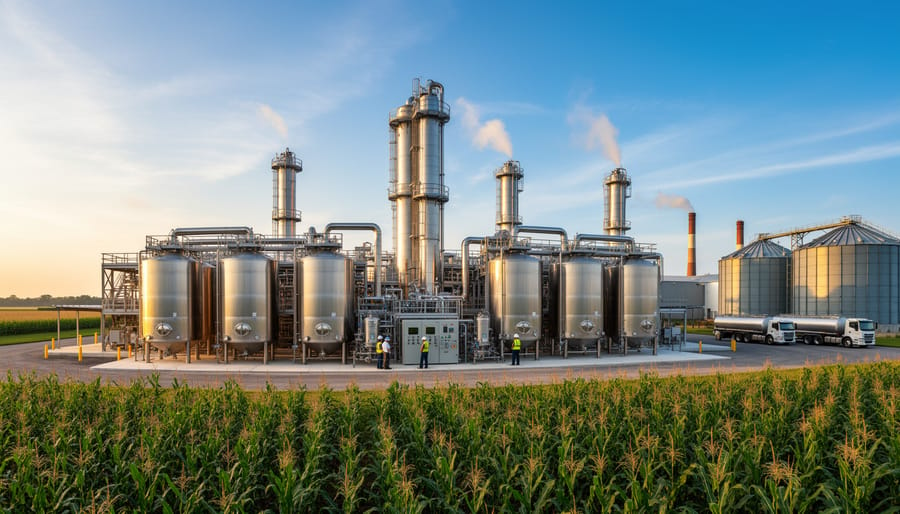
Bacteria deliver biofuel production advantages that traditional methods struggle to match. Unlike crop-based ethanol from corn or sugarcane, which requires months of growth, vast tracts of arable land, and intensive irrigation, engineered bacteria can produce fuel in days using industrial fermenters occupying a fraction of the space. This eliminates the food-versus-fuel dilemma that has plagued first-generation biofuels and removes competition for agricultural resources.
Chemical synthesis of biofuels demands high temperatures, significant pressure, and expensive catalysts, making it energy-intensive and costly. Bacteria work at ambient conditions, using their evolved enzymatic machinery to perform complex conversions at room temperature with remarkable precision. Their metabolic pathways can break down diverse feedstocks, including agricultural waste, wood chips, and even municipal refuse, that chemical processes cannot efficiently handle.
The speed differential is substantial. A bacterial fermentation tank can turn cellulosic waste into butanol in 48 to 72 hours, whereas growing rapeseed for biodiesel requires an entire growing season. Bacteria also achieve higher conversion efficiencies, transforming up to 80 percent of input carbon into fuel molecules compared to roughly 30 percent for many crop-based processes. This efficiency translates directly into lower production costs and reduced environmental impact per liter of fuel produced.
The Production Process: From Feedstock to Fuel
Feedstock Selection and Preparation
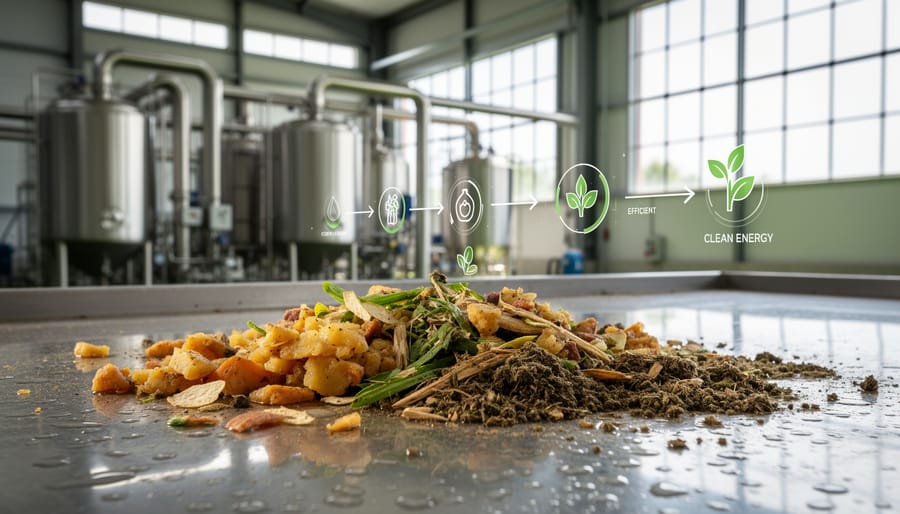
Bacterial biofuel production begins with selecting suitable raw materials that provide the sugars, starches, or lipids bacteria need for fuel synthesis. Agricultural waste such as corn stover, wheat straw, and sugarcane bagasse serves as abundant, low-cost feedstock that diverts waste from landfills. Algae offers high lipid content and rapid growth rates, while cellulosic materials from forestry residues and dedicated energy crops provide renewable carbon sources.
Preparation varies by feedstock type. Lignocellulosic materials require pretreatment to break down their tough structure, typically using dilute acid hydrolysis or steam explosion to expose cellulose and hemicellulose fibers. This step converts complex polysaccharides into simpler sugars that bacteria can metabolize. Physical processes like grinding and milling reduce particle size, increasing surface area for bacterial enzymes to access nutrients efficiently.
For algae-based production, harvesting through centrifugation or flocculation concentrates the biomass before cells are ruptured to release oils and carbohydrates. Some facilities combine multiple feedstocks to optimize nutrient profiles and maintain consistent bacterial productivity year-round, compensating for seasonal variations in agricultural waste availability. Proper preparation directly affects conversion efficiency, determining how much fuel bacteria can produce from each ton of raw material.
Bacterial Fermentation and Conversion
# Bacterial Fermentation and Conversion
Once bacteria receive pretreated feedstock, they begin the core conversion process that transforms organic waste into fuel. Inside sealed bioreactors maintained at specific temperatures (typically 30-37°C for most bacterial strains), microorganisms consume sugars and cellulose through anaerobic or aerobic pathways depending on the target fuel. Anaerobic bacteria like Clostridium species break down glucose without oxygen, producing ethanol and butanol through acetone-butanol-ethanol (ABE) fermentation. Their enzymes cleave sugar molecules in a cascade of reactions, ultimately yielding alcohol molecules with fuel properties while releasing CO2 as a byproduct.
Aerobic processes work differently but follow similar principles. Bacteria such as Pseudomonas putida require oxygen to metabolize feedstock compounds, channeling carbon through fatty acid synthesis pathways that produce lipids convertible to biodiesel. The fermentation typically runs for 48-72 hours, with bacteria multiplying rapidly as they consume nutrients and excrete fuel precursors directly into the liquid medium. Engineers monitor pH levels, nutrient concentrations, and waste product accumulation to maintain optimal conditions. When bacterial activity peaks, the broth contains maximum fuel concentrations, often 10-15% by volume for ethanol or 3-5% for more complex fuels like butanol, ready for extraction.
Fuel Extraction and Refinement
Once bacterial fermentation concludes, the resulting fuel molecules must be isolated from the culture medium and purified to meet commercial specifications. Extraction methods vary depending on the fuel type produced. For butanol and other alcohols, distillation separates the fuel from the aqueous culture broth, since these compounds have distinct boiling points. Biodiesel produced by engineered bacteria requires solvent extraction or centrifugation to separate lipid-based fuels from cellular debris and water. The crude biofuel then undergoes refinement steps: filtration removes residual bacterial cells, water separation through phase splitting eliminates moisture, and chemical treatment adjusts properties like pH and oxidative stability. For hydrogen gas, membrane separation or pressure swing adsorption captures the gas from fermentation off-gases. Quality control testing verifies that the refined fuel meets ASTM standards for combustion properties, energy content, and chemical composition before it can be blended with conventional fuels or used directly in engines.
Types of Bacterial Biofuel Production
Bacteria produce different types of fuel through distinct metabolic pathways, each suited to specific applications and feedstock sources. The four main approaches currently deployed in commercial and pilot facilities represent fundamentally different mechanisms of how biofuel works at the cellular level.
Ethanol production relies on fermentation pathways where bacteria like *Zymomonas mobilis* convert sugars into ethanol and carbon dioxide. These organisms process feedstock faster than traditional yeast, completing fermentation in hours rather than days. The bacteria break glucose into pyruvate through glycolysis, then convert it to ethanol through their natural metabolism. This approach works best with sugar-rich or starch-based feedstocks that bacteria can readily consume.
Butanol production involves more complex metabolic engineering. Species such as *Clostridium acetobutylicum* naturally produce butanol alongside acetone and ethanol through ABE (acetone-butanol-ethanol) fermentation. Butanol offers higher energy density than ethanol and doesn’t absorb water, making it compatible with existing fuel infrastructure. The production process requires strict anaerobic conditions and proceeds through acid-forming and solvent-forming phases as bacteria shift their metabolic output.
| Fuel Type | Bacterial Species | Primary Feedstock | Energy Yield |
|---|---|---|---|
| Ethanol | Zymomonas mobilis | Sugars, cellulose | 21.2 MJ/L |
| Butanol | Clostridium acetobutylicum | Starches, lignocellulose | 29.2 MJ/L |
| Biodiesel | Escherichia coli (engineered) | Fatty acids, oils | 33.1 MJ/L |
| Hydrogen | Rhodobacter sphaeroides | Organic acids, wastewater | 120 MJ/kg |
Biodiesel production through bacteria works differently than fermentation. Genetically modified *E. coli* strains synthesize fatty acid esters directly within their cells by engineering lipid metabolism pathways. These bacteria can process diverse feedstocks including waste cooking oil and agricultural residues, converting them into molecules chemically identical to conventional diesel. The bacteria essentially function as microscopic oil refineries, producing fuel that requires minimal post-processing.
Hydrogen production represents the most distinct approach. Photosynthetic bacteria like *Rhodobacter sphaeroides* split water molecules using light energy, releasing hydrogen gas through their metabolic processes. Other species produce hydrogen through dark fermentation, breaking down organic matter in the absence of light. This pathway generates a completely clean fuel with water as the only combustion byproduct, though storage and transport challenges remain.
Each production type suits different industrial contexts. Ethanol and butanol integrate into existing fermentation infrastructure. Biodiesel production offers drop-in fuel compatibility. Hydrogen production excels at converting low-value waste streams into high-energy fuel, particularly in wastewater treatment facilities where bacteria already process organic matter.
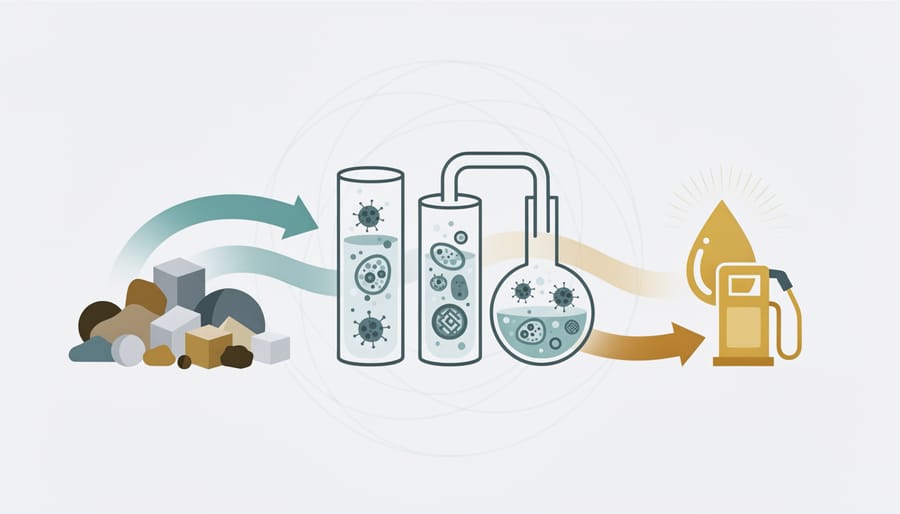
Engineered Bacteria: The 2026 Breakthrough
# Content for “Engineered Bacteria: The 2026 Breakthrough” Section
The leap from naturally occurring bacterial strains to precision-engineered microorganisms has fundamentally changed how biofuel works at the cellular level. Researchers have moved beyond selecting efficient bacteria to actively rewriting their genetic code, creating production systems that convert feedstock to fuel with unprecedented efficiency.
CRISPR-Cas9 technology now allows scientists to edit bacterial DNA with surgical precision, removing metabolic bottlenecks that previously limited fuel output. Engineers target genes controlling sugar metabolism, redirecting cellular energy away from reproduction and toward fuel molecule synthesis. A modified E. coli strain developed in early 2026 produces butanol at concentrations 40% higher than wild-type bacteria, achieved by silencing competing metabolic pathways and amplifying genes for alcohol dehydrogenase enzymes.
Synthetic biology approaches go further, inserting entirely new genetic circuits into bacterial genomes. These circuits function like molecular switches, activating fuel production only under specific conditions such as nutrient availability or cell density. Some engineered strains now produce multiple fuel types sequentially, first generating ethanol until sugar levels drop, then switching to hydrogen gas production from remaining biomass.
The most significant 2026 development involves thermophilic bacteria genetically modified to operate at temperatures exceeding 70°C. These heat-loving microbes work faster than mesophilic strains while simultaneously reducing contamination risks, since few competing organisms survive the harsh conditions. Industrial facilities using these thermophiles report 25-30% shorter production cycles.
Regulatory concerns about releasing genetically modified organisms remain, so commercial operations employ multiple containment strategies including auxotrophic strains that cannot survive outside controlled bioreactors. These bacteria require synthetic nutrients unavailable in natural environments, ensuring they die if accidentally released. This containment approach addresses both ecological safety and intellectual property protection for proprietary genetic modifications.
Real-World Applications and Commercial Viability
# Real-World Applications and Commercial Viability
Several commercial facilities worldwide now operate bacterial biofuel production at industrial scale. LanzaTech’s plant in Georgia converts steel mill emissions into 10 million gallons of ethanol annually using engineered bacteria, demonstrating how this technology captures waste carbon before it enters the atmosphere. Meanwhile, Ginkgo Bioworks partnered with airlines to produce sustainable aviation fuel through bacterial fermentation, with United Airlines committing to 1.5 billion gallons over the next decade.
The economics have shifted markedly. Production costs for bacterial biofuel dropped to $2.50-$3.00 per gallon in 2026, approaching parity with fossil fuels in regions with carbon pricing. Government incentives, including the U.S. Renewable Fuel Standard and EU Renewable Energy Directive, further improve profitability. The ability to use waste feedstock, municipal solid waste, agricultural residue, even captured CO2, eliminates raw material costs that plague crop-based biofuels.
Transportation leads adoption. Heavy freight companies including Maersk now blend bacterial diesel into marine fuel, while bus fleets in California run entirely on bacterially-produced renewable natural gas from wastewater treatment plants. Aviation represents the fastest-growing sector since bacterial processes produce jet fuel chemically identical to petroleum-based alternatives, requiring zero engine modifications.
Power generation facilities increasingly integrate bacterial biofuel systems. Combined heat and power plants convert on-site organic waste into electricity and heat, creating closed-loop operations. The technology works particularly well for facilities generating consistent waste streams, paper mills, food processing plants, breweries, turning disposal costs into revenue streams while meeting renewable energy targets.
Environmental Impact: How Bacterial Biofuel Works for the Planet
Bacterial biofuel production operates on a fundamentally different environmental premise than fossil fuels. While petroleum extraction releases carbon that has been sequestered underground for millions of years, bacteria convert recently-grown biomass or waste materials into fuel. The carbon released when bacterial biofuel burns was recently absorbed from the atmosphere by plants or other organic sources, creating a shorter, potentially neutral carbon cycle. Commercial operations in 2026 demonstrate this principle: a waste-processing facility using engineered bacteria to produce butanol from agricultural residue generates fuel while preventing methane emissions that would occur if that waste decomposed in landfills.
The waste reduction aspect represents one of bacterial biofuel’s most compelling environmental advantages. These microorganisms consume materials typically destined for disposal, food processing waste, sewage sludge, crop residues, even certain plastics in experimental systems. A single bacterial biofuel plant can divert thousands of tonnes of organic waste annually while producing energy, addressing two environmental problems simultaneously.
- Reduces reliance on land-intensive energy crops by processing existing waste streams.
- Prevents methane emissions from organic waste decomposition in landfills.
- Requires significantly less water than conventional crop-based biofuels like corn ethanol.
- Can achieve near-carbon-neutral cycles when using waste feedstocks and renewable energy for processing.
- Industrial-scale production facilities still require substantial energy inputs for heating, aeration, and separation processes.
- Potential for genetically modified bacteria to escape containment raises ecological concerns.
- Processing efficiency varies with feedstock quality, sometimes requiring chemical pretreatment that generates waste.
- Life-cycle emissions depend heavily on transportation distances for feedstock and finished fuel.
The true environmental performance depends on implementation specifics. A bacterial biofuel operation powered by coal-generated electricity and processing feedstock trucked from distant sources offers marginal improvement over fossil fuels. Conversely, facilities using renewable energy, processing local waste, and selling byproducts as fertilizer can achieve genuinely transformative environmental benefits, demonstrating how bacterial biofuel works for the planet when the entire system receives thoughtful design.
Understanding how biofuel works reveals a remarkable convergence of biology and energy technology. Bacterial production systems convert organic waste into usable fuel through elegant metabolic processes that mirror industrial refineries, but with greater efficiency and environmental benefits. These microscopic factories break down diverse feedstocks through specialized enzymatic pathways, producing everything from ethanol to biodiesel while generating minimal emissions.
The bacterial revolution in biofuel production has matured significantly by 2026. Engineered microorganisms now process waste streams previously destined for landfills, transforming agricultural residues and industrial byproducts into transportation-grade fuels. This technology addresses two critical challenges simultaneously: renewable energy generation and waste management.
Current research continues pushing boundaries through enhanced genetic modifications, multi-species consortia that improve conversion rates, and novel reactor designs that maximize bacterial productivity. Scientists are exploring extremophile bacteria capable of operating in harsh conditions, potentially reducing energy inputs during production. Integration with carbon capture systems represents another frontier, where bacterial processes actively remove atmospheric CO2 while generating fuel.
As commercial facilities scale up globally, bacterial biofuel production demonstrates how biotechnology can reshape energy infrastructure. The fundamental principles governing how biofuel works through bacterial metabolism offer a sustainable pathway forward, bridging our immediate fuel needs with long-term environmental goals.