The Energy Sciences Institute (ESI) at Yale is a research hub on the university’s West Campus, built to bring laboratory work on energy under one roof. Its director is Hailiang Wang, a Professor of Chemistry who succeeded Gary Brudvig, the Institute’s leader since 2012. The ESI was established with a gift from Tom Steyer and Katherine Taylor, and it’s one of seven institutes on West Campus.
What sets it apart is its reach across disciplines. Researchers from Chemistry, Chemical and Environmental Engineering, Mechanical Engineering, Materials Science, Electrical Engineering, Physics, and Applied Physics share abundant, flexible lab space, working on problems that no single department could solve alone. Topics range from solar fuels and catalysts for energy conversion to quantum and light-harvesting materials, energy storage, and devices for energy applications.
That blend of Science and Technology, fundamental discovery paired with engineering, is the Institute’s core logic. Below, you’ll find what the ESI is, what it studies, who it serves, and how to engage with it.
What the Energy Sciences Institute Is and Where It Sits at Yale
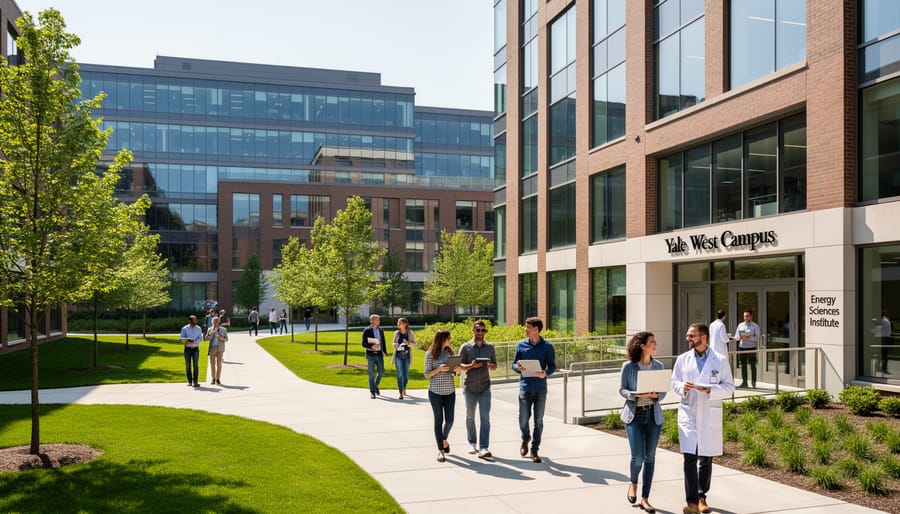
The Energy Sciences Institute (ESI) is a research hub at Yale devoted to the science behind how we produce, convert, and store energy. It was established with a gift from Tom Steyer and Katherine Taylor, and its defining feature is physical: abundant, flexible laboratory space for energy sciences research “under one roof.”
That phrase matters more than it might seem. Energy problems rarely fit neatly inside one discipline. Developing a better battery material, for instance, can involve a chemist who designs the compound, an engineer who builds it into a working device, and a physicist who explains how electrons and light behave inside it. When those people share the same building and the same equipment, a question raised at the bench can be answered down the hall rather than weeks later by email. Flexible space also means labs can be reconfigured as projects change, instead of locking researchers into rooms built for a single purpose.
In terms of where it sits at Yale, the ESI is one of seven institutes on the university’s West Campus. That setting places energy research alongside other institute-based science, which is part of the point: the campus is organized around focused, cross-cutting research rather than traditional departmental silos.
Understanding this foundation makes the rest of the Institute easier to follow, from who leads it to the research themes it pursues.
Leadership: From Gary Brudvig to Hailiang Wang
Yale’s Energy Sciences Institute has recently changed hands at the top. Gary Brudvig, whose tenure Brudvig led since 2012, guided the Institute through more than a decade as its director. He has now been succeeded by Hailiang Wang.
Wang is a Professor of Chemistry and serves as the Institute’s current director. His appointment places a chemist at the head of a shared research environment that spans chemistry, engineering, materials science, and physics. For readers following the Institute, this is the main leadership fact to know: the directorship passed from Brudvig to Wang, and Wang now leads the ESI.
Beyond the transition itself, this article sticks to the confirmed record and doesn’t speculate about changes in direction or priorities.
What the Institute Studies: Core Research Areas in Energy Science

Why the Interdisciplinary Model Matters
Energy problems rarely respect departmental boundaries. A better battery, for example, depends on chemistry, device engineering, and materials behavior all at once. The Energy Sciences Institute puts researchers from seven Yale departments in the same building, so these perspectives meet in the lab rather than only in journals:
- Chemistry contributes molecular design and reaction mechanisms.
- Chemical & Environmental Engineering contributes process thinking and environmental context.
- Mechanical Engineering contributes thermal and energy-systems expertise.
- Materials Science contributes the structure and performance of functional materials.
- Electrical Engineering contributes devices and the movement of charge.
- Physics contributes fundamental principles of energy and matter.
- Applied Physics contributes physics-driven approaches to practical devices.
Consider what this means in practice. A chemist might design a promising catalyst, while a materials scientist examines how it behaves at the nanoscale. That is where nanotechnology becomes relevant to energy conversion. Physicists and applied physicists, meanwhile, help explain the behavior of quantum materials, and engineers ask whether a result can become a working device. No single field covers that whole chain.
Who the Institute Serves and Who Should Pay Attention
The Energy Sciences Institute draws interest from three overlapping groups. Researchers and students in the participating departments (Chemistry, Chemical & Environmental Engineering, Mechanical Engineering, Materials Science, Electrical Engineering, Physics, and Applied Physics) work alongside colleagues from neighboring fields, which is where a shared “under one roof” laboratory model pays off. Academic collaborators in energy science can use the Institute’s research themes to see where their own work might connect. Professionals and enthusiasts tracking energy materials and conversion get a window into the fundamental science behind future technologies.
The table below translates the Institute’s research areas into plain language, showing what each group may find worth following.
| Research area | What it involves and why it matters |
|---|---|
| Materials for energy production and storage | Designing substances that generate or hold energy efficiently, central to better batteries and power systems. |
| Solar fuels | Using sunlight to drive chemical reactions that produce storable fuels. |
| Catalysts for energy conversion chemistry | Developing substances that speed up reactions that convert one form of energy into another, without being used up. |
| Quantum, light-harvesting, and optical materials | Studying how materials capture and respond to light, which underpins solar and optical technologies. |
| Devices for energy applications | Turning laboratory findings into working components that can be tested for real-world energy use. |
For any of these audiences, the practical takeaway is the same: following the Institute’s work offers a clearer view of where energy science is heading, without any assumption about specific programs or admissions.
How to Engage with the Energy Sciences Institute
The most reliable way to connect with the Energy Sciences Institute is through Yale’s own channels. Specific programs aren’t detailed here, so check official Yale sources for current offerings, events, and contact details rather than relying on secondhand summaries.
A few practical starting points:
- Review the Institute’s official Yale web page for its description, research themes, and the director’s listing.
- Explore the research listings of participating departments, including Chemistry, Materials Science, and Physics, to see which faculty work on topics that match your interests.
- Follow announcements from Yale’s West Campus institutes, where news and events tied to the ESI are most likely to appear.
If you’re a student or researcher, the faculty pages in the participating departments are often the most useful place to learn what a given lab is working on. Professionals and enthusiasts can simply follow the Institute’s official updates. Whatever your goal, treat Yale’s current pages as the final word on what’s available and how to reach the right people.
Frequently Asked Questions About Yale’s Energy Sciences Institute
What is the Energy Sciences Institute at Yale?
The ESI is an interdisciplinary research institute established with a gift from Tom Steyer and Katherine Taylor. It offers abundant, flexible laboratory space for energy sciences research “under one roof,” and it is one of seven institutes on Yale’s West Campus.
Who leads the Institute?
Hailiang Wang, a Professor of Chemistry, is the current director. He succeeded Gary Brudvig, who led the Institute from 2012.
Which departments take part?
Research draws on Chemistry, Chemical & Environmental Engineering, Mechanical Engineering, Materials Science, Electrical Engineering, Physics, and Applied Physics.
What topics does it research?
Themes include materials for energy production and storage, solar fuels, catalysts for energy conversion, and quantum, light-harvesting, and optical materials. They also cover energy transport in condensed phase materials, quantum optimization for energy, characterization methods, and devices for energy applications.
Where can I find current program information?
Specific programs, events, and contact details are best confirmed directly with official Yale sources, such as the Institute’s own web presence and the pages of participating departments and faculty.
For anything beyond these basics, the official Yale channels remain the most reliable place to check, since offerings and listings can change over time.
Yale’s Energy Sciences Institute shows what a shared research environment can do for Science and Technology in Energy. Housed on the West Campus as one of seven institutes there, it gives researchers from Chemistry, Chemical & Environmental Engineering, Mechanical Engineering, Materials Science, Electrical Engineering, Physics, and Applied Physics abundant, flexible laboratory space under one roof. That proximity matters when the work spans materials for energy production and storage, solar fuels, catalysts, light-harvesting and quantum materials, and devices for energy applications.
Leadership has passed from Gary Brudvig, who led the Institute from 2012, to Hailiang Wang, a Professor of Chemistry and its current director. The Institute’s breadth, from fundamental characterization methods to applied devices, is its defining strength.
For current programs, events, and contact details, check Yale’s official Energy Sciences Institute pages and the departmental listings of participating faculty. Those sources will always reflect the Institute’s latest developments more reliably than any summary.