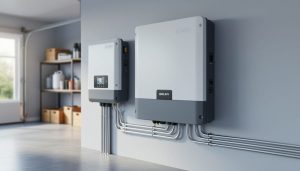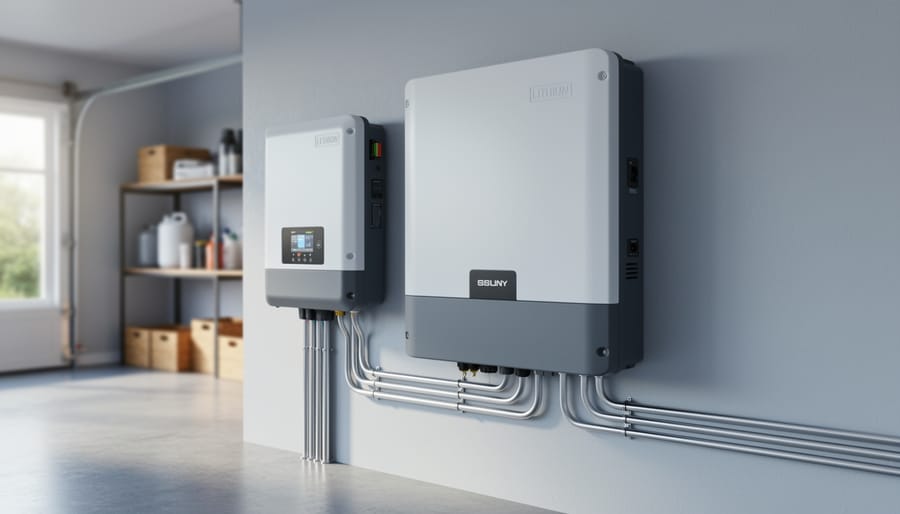
A 9 kWh solar battery system provides enough storage capacity for most small to medium-sized households to run essential loads during a grid outage or shift daytime solar generation to evening use. For homeowners evaluating home solar solutions the question isn’t just whether 9-10 kWh suits your needs, but which system architecture, chemistry, and brand offers the best performance, longevity, and value in 2026’s rapidly evolving battery market.
Battery storage has moved from niche backup power to a core component of residential solar, driven by shrinking costs, improved inverter integration, and rising demand for energy independence. Yet the sheer variety of options creates confusion. Do you need AC-coupled flexibility or DC-coupled efficiency? Lithium iron phosphate reliability or cutting-edge solid-state technology? A single high-capacity unit or modular expansion? And with installer quotes ranging thousands of dollars for seemingly similar 10 kWh systems, understanding what drives performance and price becomes critical.
This guide cuts through the marketing noise. We compare battery types, decode the factors that actually matter for your home’s load profile and solar output, and highlight which models installers are quoting most in 2026 based on verified marketplace data. You’ll learn how to size storage correctly, avoid common compatibility pitfalls, and evaluate the trade-offs between upfront cost and long-term value. Whether you’re adding storage to an existing solar array or designing a complete energy system from scratch, you’ll finish with the clarity needed to choose a battery that aligns with your goals and budget.
Understanding the 9 kWh Solar System
When homeowners search for a “9 kWh solar system,” they’re typically looking at battery storage capacity, not the solar panel array itself. Solar panels are rated by their power output in kilowatts (kW), how much electricity they generate at any moment under ideal conditions. A 9 kWh battery, by contrast, measures energy storage capacity, how much electricity it can hold for later use. Think of it this way: solar panels are like a water tap (measured by flow rate), while the battery is the tank (measured by volume).
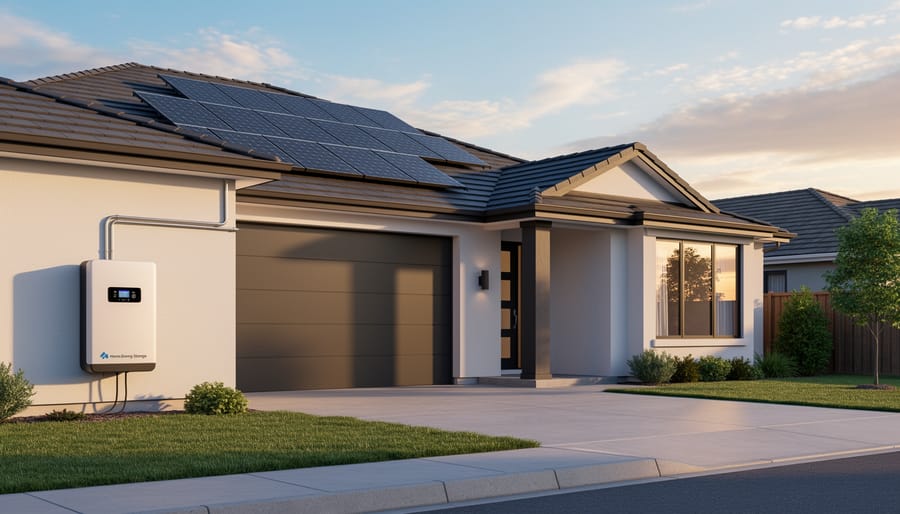
A 9-10 kWh battery paired with solar panels creates a practical domestic energy system. During daylight hours, your panels generate electricity to power your home and charge the battery. Once the sun sets, the stored energy runs your household through the evening and night. This setup reduces reliance on grid electricity during peak-rate hours when utility costs are highest.
For context, the average UK household uses about 8-10 kWh daily, while US homes average 25-30 kWh. A 9 kWh battery won’t power an entire day’s consumption for most American homes, but it effectively covers evening loads, lighting, refrigeration, TV, and device charging. If backup power during outages is your priority, this capacity typically keeps essential circuits running for 8-12 hours, depending on which appliances you’re powering and how you manage consumption.
The practical value lies in strategic use rather than full self-sufficiency. Homeowners pair these batteries with solar arrays sized to their roof space and energy goals, creating a system that reduces grid dependence without requiring oversized equipment.
What to Look for When Choosing Your System
Capacity and Power Output
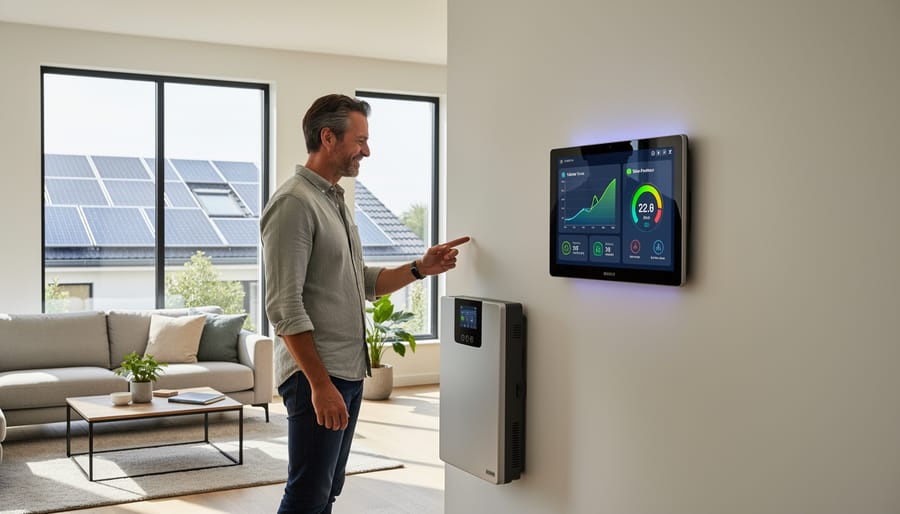
When evaluating a 9-10 kWh battery for your home, understand that capacity tells only part of the story. Total capacity represents the battery’s full storage, but usable capacity, typically 85-95% of the total, determines how much energy you can actually access. A 10 kWh battery might deliver 9-9.5 kWh in practice, which matters when calculating how long the system will sustain your household during an outage or overnight.
Equally important is the continuous power output rating, measured in kilowatts (kW). This figure dictates how many appliances you can run simultaneously. A battery with 5 kW continuous output handles essentials like refrigerators, lights, and Wi-Fi, while a 10+ kW rating supports heavier loads including air conditioning or electric cooking. If your priority is whole-home backup rather than just critical circuits, verify the continuous output meets your peak simultaneous demand, not just your daily energy consumption.
Match capacity to your overnight or backup duration needs: a typical home using 30 kWh daily consumes roughly 10-12 kWh overnight, making a 9-10 kWh system well-suited for evening solar storage. For extended outage resilience, calculate your essential load draw and desired backup hours to confirm the battery’s usable capacity and output rating align with real-world requirements.
System Compatibility and Integration
Installers approach compatibility through four lenses: your existing or planned inverter, the coupling architecture that fits your setup, which loads you want backed up during an outage, and what your local jurisdiction requires. A battery paired with the wrong inverter simply won’t work, or worse, will underperform and void warranties, so professionals assess your electrical panel, inverter brand, and wiring before recommending a specific model.
AC-coupled systems connect to your home’s main panel after the solar inverter converts DC to AC, making them ideal for retrofits where solar panels are already installed. They’re flexible and straightforward to add, but you pay for two conversions (DC to AC, then back to DC for storage). DC-coupled systems integrate between the panels and a hybrid inverter that manages both solar and storage, eliminating one conversion step for slightly better efficiency. New installations with solar and battery ordered together often favour DC coupling; retrofits typically lean AC.
The backup decision matters: whole-home backup requires a larger battery bank and transfer switch, while critical-load panels isolate essentials like refrigeration and lighting, reducing capacity needs. Local permits govern everything, system size thresholds, interconnection rules, required inspections, and vary widely by utility and municipality. Installers familiar with your area navigate these requirements and ensure your system meets code, avoiding costly delays or compliance failures down the line.
Value and Long-Term Performance
A battery’s headline price tells only part of the story. The system that costs $2,000 less upfront may deliver fewer usable kWh over its lifetime, making it more expensive per cycle. Calculate cost per kWh of usable capacity as your primary value metric. For example, the EcoFlow Ocean Pro 10kWh Battery lists at $6,890 with 10 kWh usable capacity, working out to $689 per kWh. Compare that figure across models, then layer in warranty terms and performance guarantees.
Look for warranties covering both capacity retention and component failures. Top systems guarantee at least 70% capacity after ten years of daily cycling, though some promise 80% or better. These guarantees matter because lithium-ion cells degrade with use. A system that retains more capacity delivers more value over its working life, even if it costs slightly more today.
Performance guarantees also specify cycle count before degradation kicks in, typically 3,650 to 6,000 full cycles for quality residential units. Divide the total warranted cycles by 365 to estimate guaranteed years of daily use. A 4,000-cycle warranty means roughly eleven years at one cycle per day. If you choose solar panels sized to charge the battery fully most days, that cycle count becomes your real performance horizon, not just the calendar warranty period.
Types of Home Battery Systems Compared
Home battery systems for solar installations come in several distinct configurations, each with trade-offs in cost, complexity, and performance. Understanding these differences helps you match the right technology to your home’s existing setup and future expansion plans.
Battery Chemistry Variations
Most domestic solar batteries use lithium-ion chemistry, but variations exist. Lithium iron phosphate (LFP) cells dominate the residential market because they tolerate deep discharge cycles better than older lithium-cobalt designs and pose lower fire risk. Some manufacturers use lithium nickel manganese cobalt (NMC) chemistry for higher energy density in a smaller footprint. Both chemistries deliver thousands of cycles over their lifespan, but LFP typically handles temperature extremes more gracefully, an advantage if your battery sits in an unconditioned garage.
AC-Coupled Versus DC-Coupled Systems
Coupling determines how the battery connects to your solar array and home electrical system. AC-coupled batteries include their own inverter and connect to your main electrical panel, making them easier to retrofit onto existing solar installations. You can add an AC-coupled battery years after installing panels without replacing your solar inverter. DC-coupled systems integrate battery storage on the same circuit as your solar panels, sharing a single hybrid inverter. This configuration converts electricity fewer times (improving round-trip efficiency by 4-8%), but requires coordinated equipment from the start or a full inverter replacement during retrofit.
Modular Versus All-in-One Designs
All-in-one systems pack the rated capacity into a single cabinet, simpler installation, one warranty, fixed capacity. The EcoFlow Ocean Pro 10kWh Battery exemplifies this approach, delivering 10 kWh usable capacity in one unit at $6,890 list price. Modular systems let you stack smaller battery modules to reach your target capacity, then add more later as your needs grow. A modular 9 kWh system might start with three 3 kWh modules. This flexibility costs more upfront per kWh and requires planning for physical space, but avoids replacing the entire system if you later want 15-18 kWh of storage.
| System Type | Best Use Case | Installation Requirements | Expandability |
|---|---|---|---|
| AC-Coupled | Retrofitting existing solar systems | Separate battery inverter, panel space | Add batteries independently of solar |
| DC-Coupled | New installations prioritizing efficiency | Hybrid inverter, coordinated equipment | Limited by inverter capacity |
| All-in-One | Fixed capacity needs, simple installation | Wall or floor space for single unit | None without replacing entire system |
| Modular | Future capacity growth expected | Space for multiple units, compatible modules | Stack additional modules as needed |
Installers match these configurations to your home’s inverter type, backup load priorities, and local permit requirements. A house with recent solar panels and a string inverter benefits from AC-coupled storage. If you’re installing solar and storage together, DC-coupled systems maximize efficiency and minimize equipment. The right choice depends less on which technology sounds impressive and more on what fits your existing infrastructure and realistic expansion timeline.
Top-Rated Systems for 2026
Performance Leaders
Performance leaders in the 9-10 kWh home battery segment deliver exceptional energy throughput, high continuous power ratings, and robust solar input capacity. These systems handle demanding loads during grid outages and maximize the value of your solar array’s output.
The Tesla Powerwall 3 sets the benchmark with 13.5 kWh total energy capacity, 11.5 kW continuous power output, and the ability to accept up to 20 kW of solar input. That continuous power rating means the Powerwall 3 can simultaneously run multiple high-draw appliances during an outage, such as an air conditioner, refrigerator, and EV charger. The generous solar input capacity ensures you capture peak production from a large solar array without clipping losses.
FranklinWH aPower 2, MidNite Solar Powerflo 16, and Sigenergy SigenStor BAT also rank among top performers in EnergySage’s 2026 home battery ratings, which evaluate the 40 most-quoted models from October 2025 through March 2026 across performance, warranty, outage intelligence, value, and installer popularity. These systems excel in energy throughput and power delivery, making them suitable for homes with higher consumption or critical backup needs.
When evaluating performance leaders, compare continuous power output rather than peak ratings. A system advertising 10 kW peak but only 5 kW continuous will struggle to run major appliances simultaneously. Similarly, examine how much solar input the battery accepts; undersized input capacity wastes your array’s midday production. Performance leaders balance all three metrics: capacity, continuous power, and solar input headroom.
Value-Focused Options
Cost-conscious homeowners should evaluate batteries on total lifetime value rather than sticker price alone. The most efficient metric is cost per usable kilowatt-hour, which reveals how much storage capacity you actually purchase. In 2026, competitive systems fall between $850 and $1,200 per kWh for installed capacity, though list prices vary widely before installation fees.
The EcoFlow Ocean Pro 10kWh Battery exemplifies strong value positioning at $6,890 list price, translating to $689 per kWh for its 10 kWh usable capacity. That figure sits well below typical thresholds, though you’ll need to factor installation costs into your total budget. When installers add labor, permitting, electrical upgrades, and integration work, single battery systems typically land between $11,000 and $17,500 complete, still significantly more affordable than premium performance leaders.
Broader installation costs for home battery systems range from $8,000 to $20,000 depending on system complexity, regional labor rates, and whether you’re pairing the battery with new solar panels or retrofitting an existing array. California installations, for reference, cluster around the $11,000-$17,500 range for single battery configurations.
When comparing value options, examine usable versus total capacity closely. Some manufacturers advertise total capacity but limit how much you can actually drain without degrading the battery. A 10 kWh battery with 95% usable capacity delivers better practical value than a 12 kWh unit limited to 70% depth of discharge. Request multiple quotes with cost-per-kWh calculations to make fair comparisons across models and installers.
Installer Favorites
Installers favor systems they’ve deployed successfully, that ship reliably, and that work across varied home configurations. EnergySage’s 2026 ratings reveal which batteries installers quote most often, a proxy for real-world confidence and availability. Tesla Powerwall 3 dominates quote volume, reflecting its brand recognition, proven track record, and wide inverter compatibility. FranklinWH aPower 2 follows closely, popular for its modular design and seamless integration with diverse solar setups. MidNite Solar Powerflo 16 and Sigenergy SigenStor BAT also rank among installer favorites, indicating strong support networks and straightforward permitting. When you request quotes, systems appearing repeatedly signal that local professionals trust them to perform, arrive on schedule, and pass inspection without complications. High quote frequency doesn’t guarantee the best fit for your specific needs, but it does mean parts, service, and installer expertise are readily available.
Common Mistakes to Avoid
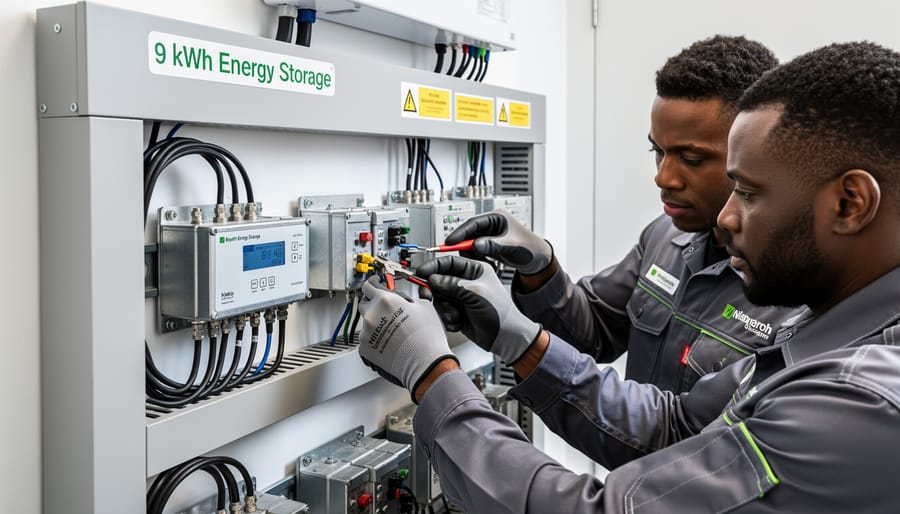
Choosing a solar battery system involves decisions that affect your home’s energy resilience for a decade or more, yet many homeowners rush through the process and regret it later. Here are the pitfalls that trip up buyers most often.
Undersizing for Backup Needs
Many households select a battery based on typical daily consumption without considering what they actually need during an outage. A 9-10 kWh battery might cover essential loads, refrigerator, lights, internet, a few outlets, for 12-24 hours, but it won’t run central air conditioning, electric heating, or a full-house load indefinitely. List your critical appliances, calculate their combined wattage, and determine how long you need backup power. If you’re in an area with multi-day outages or want to run high-draw appliances, you’ll need either a larger system or realistic expectations about load management. Don’t assume “10 kWh” equals ten hours of backup without checking your home’s actual draw.
Ignoring Compatibility Requirements
Homeowners sometimes buy a battery they found online without confirming it works with their existing solar inverter or meets local electrical codes. AC-coupled systems work with most setups but add conversion losses; DC-coupled batteries require a compatible hybrid inverter. Installers on platforms like EnergySage match batteries to your home’s inverter, coupling type, backup loads, and local permits for exactly this reason. Skipping this step can mean returning equipment, paying for additional components, or facing permit rejection.
Fixating on Upfront Cost
The cheapest system often isn’t the best value. A battery priced at $689 per kWh like the EcoFlow Ocean Pro looks attractive, but what’s the warranty coverage, the throughput guarantee, and the degradation curve over ten years? Some budget options sacrifice performance ratings, installer support, or long-term capacity retention. Calculate cost per usable kWh, then factor in how much capacity the system retains after a decade and whether the manufacturer will still support it. EnergySage’s 2026 ratings weigh performance, warranty, outage intelligence, value, and popularity because all five matter, not just the initial check you write.
Skipping Professional Site Assessment
Online calculators provide estimates, but they don’t account for your home’s electrical panel capacity, roof shading patterns, local utility rates, or whether your main breaker can handle additional loads. Professional installers identify issues, like needing a panel upgrade or discovering that your roof orientation limits solar input, that change system sizing and costs. A site visit also reveals whether your planned backup loads exceed what a single battery can deliver, saving you from discovering that limitation during your first power outage.
Installation and Cost Considerations
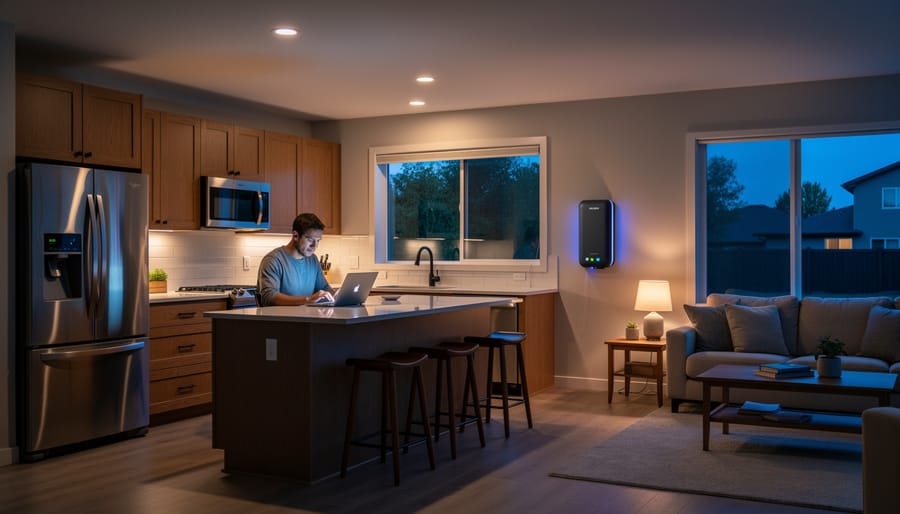
Installing a 9-10 kWh battery system typically takes one to three days once permits are approved, though permitting itself can add weeks or months depending on your local authority having jurisdiction. A qualified installer will assess your electrical panel, identify backup circuits, and determine whether your setup requires service upgrades before the battery can be connected.
Expect the process to include a site survey, permit application, electrical work, battery mounting, inverter integration, and final inspection. Some homes need panel upgrades to accommodate the battery’s charging rate and backup load requirements. If you’re retrofitting a battery to an existing solar array, the installer must verify compatibility with your current inverter or recommend a coupling approach that works with your configuration.
Installed costs for a single battery system in the 9-10 kWh range vary widely by geography, installer, and system complexity. California-based installations typically run $11,000 to $17,500 for a complete single-battery setup, including hardware, labor, permitting, and commissioning. Regions with simpler permitting or lower labor rates may see costs at the lower end of that spectrum, while areas requiring extensive electrical upgrades or navigating complex approval processes trend higher.
Cost per kilowatt-hour provides a more meaningful comparison than headline price alone. Popular systems in this capacity range benchmark between $850 and $1,200 per kWh when you account for usable capacity. The EcoFlow Ocean Pro 10kWh Battery, for instance, lists at $6,890 with 10 kWh usable capacity, working out to $689 per kWh before installation. Installed costs will be higher, but that ratio helps you evaluate whether a quoted price represents fair value relative to what you’re actually getting.
Location drives much of the variation. States with mature solar markets, streamlined permitting, and competitive installer networks tend toward the lower end of the cost range. Areas where solar-plus-storage is less common often carry premium pricing due to limited installer availability and longer permitting timelines. Installer experience matters as well: firms with high volume and established relationships with local authorities typically move faster and quote more competitively than occasional players.
Get multiple quotes and compare cost per kWh alongside total installed price. A system that appears cheaper upfront may deliver less usable capacity or require costly future upgrades, while a higher initial investment can prove more economical over the system’s lifespan.
Frequently Asked Questions
Is a 9-10 kWh battery large enough for your home? That depends on your daily consumption and backup priorities. The average American household uses roughly 30 kWh per day, so a single 9-10 kWh battery stores about one-third of that total. For typical homes pairing batteries with solar panels, this capacity covers essential evening loads after the sun sets and provides several hours of backup during outages if you manage usage carefully. If you need whole-home backup for extended periods, you’ll likely need multiple batteries or a larger system.
How long will a 9-10 kWh battery power my house during an outage?
Runtime depends entirely on which loads you’re running: powering just critical circuits like refrigeration, lighting, and communication typically gives you 12-24 hours, while running heating, cooling, and major appliances may drain the battery in 2-4 hours. Most installers help you size backup capacity by calculating your essential load in kW, then dividing usable battery capacity by that figure.
Can I retrofit a battery to my existing solar array?
Yes, but compatibility matters. AC-coupled batteries work with nearly any existing solar inverter, making them the simplest retrofit option. DC-coupled systems require compatible inverters and often involve more extensive electrical work, so discuss your current setup with installers before committing to a specific model.
What warranty terms should I expect?
Most reputable manufacturers offer 10-year warranties covering a minimum retained capacity, often 60-70 percent of original usable energy after a decade. Performance-focused systems provide stronger guarantees, and some extend coverage to 12-15 years, so compare both warranty length and the percentage of capacity guaranteed at the end of the term.
How do I compare true value across different brands?
Calculate cost per usable kWh by dividing the installed price by usable capacity, then weigh that figure against warranty strength, continuous power output, and installer confidence in the brand. Popular systems averaging $850-$1,200 per kWh installed offer a benchmark; anything significantly cheaper may sacrifice performance or support, while premium models justify higher costs through superior specs or longer guarantees.
When evaluating whether a 9-10 kWh system makes financial sense, consider both upfront investment and long-term savings. Single battery installations typically range $11,000-$17,500 depending on location and installer, with the cost-per-kWh metric helping you spot genuine value. Systems like the EcoFlow Ocean Pro 10kWh Battery, at $6,890 list price and $689 per kWh with 10 kWh usable capacity, represent the value end of the spectrum before installation costs. Premium options command higher prices but deliver stronger warranties, better outage intelligence, and higher power output.
Don’t overlook compatibility requirements when comparing systems. Installers match batteries to your home’s inverter type, electrical panel capacity, backup load priorities, and local permitting rules, so a model that works seamlessly in one home may require costly modifications in another. Request detailed quotes from multiple installers who’ve installed your preferred systems recently, and ask them to explain any compatibility concerns specific to your setup. The right 9-10 kWh battery should integrate smoothly with your existing solar panels, meet your household’s energy patterns, and deliver reliable performance for at least a decade.
Choosing the right battery storage system for your home comes down to a clear framework: match the 9-10 kWh capacity to your actual consumption patterns and backup priorities, not an arbitrary number. Your household’s evening energy use and which circuits you want protected during outages should drive the decision, not marketing claims about total capacity.
Prioritize compatibility and installer expertise over the lowest upfront price. A system that integrates smoothly with your existing solar setup and receives professional installation will outperform a cheaper option that creates headaches. Evaluate candidates using cost-per-kWh as your benchmark, options like the EcoFlow Ocean Pro at $689 per kWh set a useful comparison point, and scrutinize warranty coverage for both capacity retention and duration.
Leverage 2026 marketplace data from platforms like EnergySage, which ranks 40 frequently quoted models based on performance, value, and installer confidence. These real-world metrics reveal which systems deliver in typical home installations, not just on spec sheets.
A well-matched 9-10 kWh battery serves most households effectively, providing meaningful energy independence and backup power while supporting GHG emissions reductions. Your investment moves you closer to zero emissions operation when paired with solar panels, creating resilience and environmental benefit simultaneously.