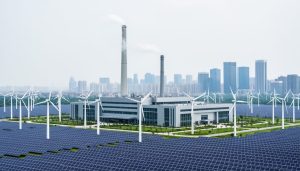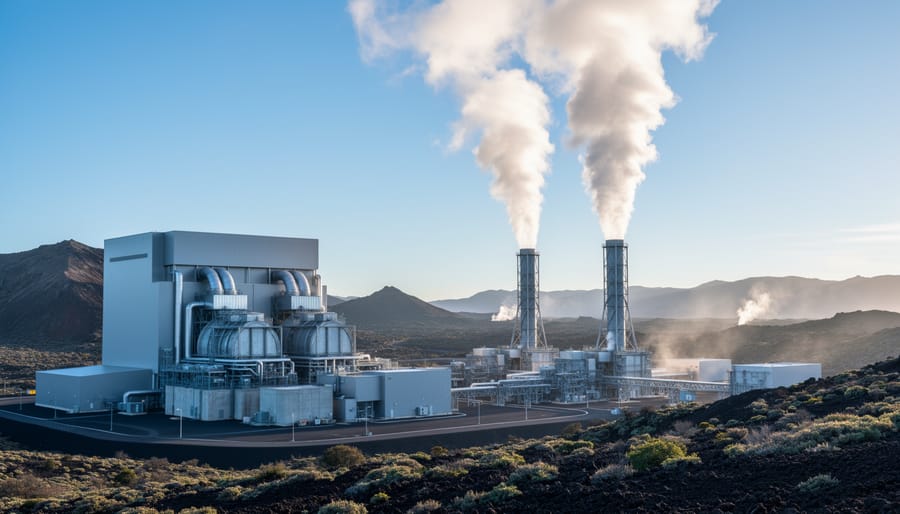
A geothermal power source is a renewable energy resource that captures heat stored beneath Earth’s surface to generate electricity or provide direct heating. This heat, originating from the planet’s formation and ongoing radioactive decay of minerals in the crust and mantle, remains available 24/7 regardless of weather or season, making it one of the most reliable forms of renewable energy.
The significance of geothermal resources extends beyond their reliability. Unlike solar or wind installations that require large land footprints, geothermal plants occupy minimal surface area while delivering continuous baseload power. Countries with accessible geothermal reservoirs, such as Iceland, Kenya, and New Zealand, already meet substantial portions of their electricity demand from this source. In 2026, global installed geothermal capacity continues to expand as drilling technology improves and enhanced geothermal systems unlock previously inaccessible heat reservoirs.
This article explains how geothermal power sources work, from the geological conditions that create exploitable heat to the extraction methods that bring it to the surface. You’ll learn about the different types of geothermal resources, including hydrothermal, geopressured, and hot dry rock systems, and understand their practical applications in both electricity generation and direct-use heating. Whether you’re evaluating renewable energy options or seeking to understand how Earth’s internal heat translates into usable power, the following sections provide the technical foundation and real-world context you need.
What a Geothermal Power Source Means
A geothermal power source is thermal energy extracted from Earth’s interior for conversion into electricity or direct heating. Unlike solar or wind energy that originates externally, this power comes from the planet’s own heat reservoir, accumulated over billions of years and continuously regenerated through radioactive decay deep within the crust and mantle. That internal heat radiates outward, creating temperature gradients that, under the right geological conditions, can be tapped for human use.
The term “geothermal resource” describes any concentration of Earth’s heat that exists in accessible formations, while “geothermal power source” specifically refers to that thermal energy when it’s being actively harnessed for practical applications. The distinction matters because not every hot rock formation constitutes a viable power source, the heat must be extractable through wells, transferable to a working fluid, and present in sufficient quantity to sustain energy production over time.
Understanding how this heat reaches usable depths requires familiarity with several key concepts:
- Geothermal gradient
- The rate at which temperature increases with depth below Earth’s surface, typically 25-30°C per kilometer in normal crust but reaching 40-80°C per kilometer in tectonically active zones.
- Geothermal reservoir
- A subsurface volume of permeable rock saturated with hot water or steam, bounded by impermeable layers that trap thermal energy and prevent its rapid dissipation.
- Thermal conductivity
- A rock’s ability to transfer heat through its structure; low-conductivity cap rocks act as insulators, allowing high temperatures to persist at economically drillable depths.
- Heat flux
- The rate at which thermal energy flows upward through geological formations, measured in milliwatts per square meter, indicating the intensity of geothermal activity in a given area.
These physical properties determine where geothermal power sources can be developed economically. Regions with elevated heat flux, steep thermal gradients, and permeable reservoirs capped by insulating layers become prime candidates for extraction, transforming what would otherwise remain dormant geological heat into a controllable energy supply.
How Geothermal Power Sources Work
Natural Heat Generation
Earth’s internal heat originates from two primary sources that have sustained subsurface temperatures for billions of years. Approximately 50% comes from primordial heat, thermal energy trapped during the planet’s violent formation 4.5 billion years ago, when gravitational compression and countless asteroid impacts generated extreme temperatures. This residual energy continues to dissipate slowly through the planet’s layers.
The remaining heat derives from ongoing radioactive decay of naturally occurring isotopes within Earth’s mantle and crust. Uranium-238, uranium-235, thorium-232, and potassium-40 undergo spontaneous nuclear disintegration, releasing energy as alpha particles, beta particles, and gamma radiation. These decay processes convert mass into thermal energy at predictable rates, generating an estimated 20 terawatts of continuous heat output globally.
Together, these mechanisms maintain the temperature gradient that increases with depth, typically 25 to 30 degrees Celsius per kilometer in continental crust, though rates vary significantly based on local geology. This persistent heat flow creates the stable, renewable energy foundation that geothermal power systems tap into, distinguishing these sources from intermittent renewables dependent on weather or daily cycles.
Heat Transport and Accumulation
Earth’s internal heat doesn’t remain stationary, it moves through rock and fluids toward the surface through two primary mechanisms: conduction and convection. Conduction transfers heat directly through solid rock as faster-moving molecules collide with slower ones, a relatively slow process that dominates in dense crystalline formations. The rate depends on rock type; granite conducts heat about three times faster than sedimentary sandstone.
Convection accelerates heat transport dramatically when groundwater circulates through fractured or porous rock. Hot water rises as it becomes less dense, cooler water descends to replace it, and this continuous cycle creates convection cells that can move thermal energy hundreds of times faster than conduction alone. Deep fracture systems and fault zones act as natural highways for these convective flows.
Geological structures determine where exploitable geothermal reservoirs form. Impermeable cap rocks, dense clay or unfractured volcanic layers, trap rising heat beneath them, preventing dissipation. Below these seals, permeable reservoir rocks store heated water at elevated pressures. Volcanic calderas, rift zones, and regions with thinned crust concentrate heat near the surface, creating high-temperature reservoirs at drillable depths of two to three kilometers rather than the ten-plus kilometers needed in tectonically stable areas.
Energy Extraction Process
Once a geothermal reservoir is identified, extraction begins with drilling production wells that penetrate the heat-bearing formation, typically reaching depths between one and three kilometers. In hydrothermal systems, naturally circulating groundwater absorbs heat from surrounding rock and rises through the well under its own pressure or via pumping. For enhanced geothermal systems, water is injected through one well, travels through fractured hot rock where it heats up, then returns through separate production wells. At the surface, this hot fluid either drives turbines directly (in high-temperature steam systems) or transfers its thermal energy to a secondary working fluid through heat exchangers (in binary plants). The cooled fluid is then reinjected into the reservoir through injection wells, creating a closed loop that maintains reservoir pressure and enables sustainable long-term extraction.
Types of Geothermal Power Sources
Hydrothermal Resources
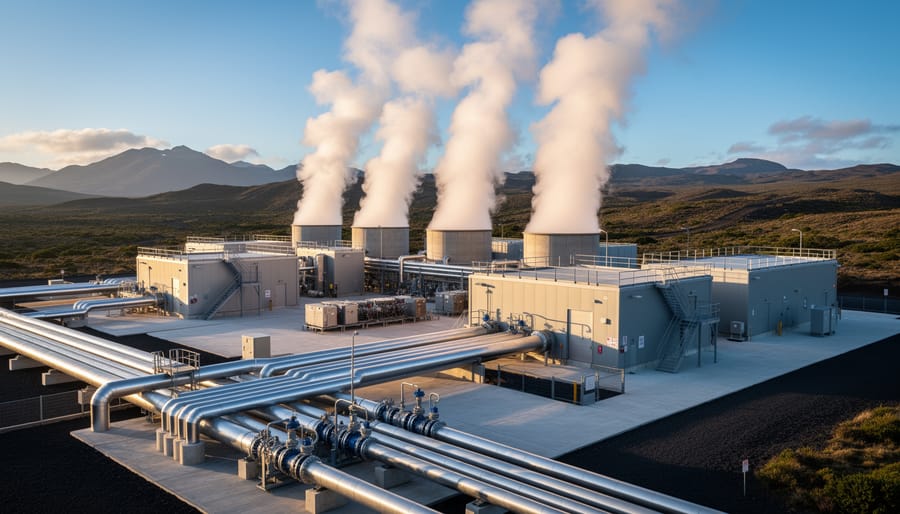
Hydrothermal resources represent the most commercially developed category of geothermal power sources, accounting for nearly all operating geothermal power plants worldwide. These systems occur where groundwater percolates through fractured or porous rock, accumulates heat from surrounding formations, and becomes trapped in subsurface reservoirs with adequate permeability to allow fluid circulation.
Two primary types define hydrothermal resources. Vapor-dominated systems contain superheated steam with minimal liquid water, found in fewer than five percent of known geothermal fields but offering the simplest extraction process. The Geysers field in California exemplifies this rare configuration. Liquid-dominated systems, far more common, hold pressurized hot water that flashes to steam when brought to the surface. These reservoirs typically exist at depths between one and three kilometers, with temperatures ranging from 150°C to above 350°C depending on local heat flow and geological structure.
Hydrothermal systems require three essential geological conditions: a heat source, permeable reservoir rock (often fractured volcanic formations or sedimentary aquifers), and an impermeable caprock that prevents thermal energy from dissipating upward.
Enhanced Geothermal Systems (EGS)
Enhanced Geothermal Systems represent a fundamental shift in how we access Earth’s thermal resources. Unlike hydrothermal reservoirs that depend on naturally occurring water and permeability, EGS creates artificial reservoirs in hot crystalline rock formations that lack sufficient porosity or natural fluid content. The process begins with drilling into deep, high-temperature rock, typically 3 to 5 kilometers down where temperatures exceed 150°C. Engineers then inject pressurized water to fracture the rock, creating a network of fissures that increase permeability. This hydraulic stimulation opens pathways for fluid circulation between injection and production wells.
Once the engineered reservoir is established, water cycles through the fractured rock mass, absorbing heat before returning to the surface. EGS technology unlocks vast geothermal resources in regions with favorable temperature gradients but inadequate natural permeability, including continental interiors far from tectonic boundaries. Current pilot projects in Australia, France, and the western United States are refining stimulation techniques and demonstrating commercial viability, though induced seismicity and thermal drawdown remain active research concerns.
Geopressured Resources
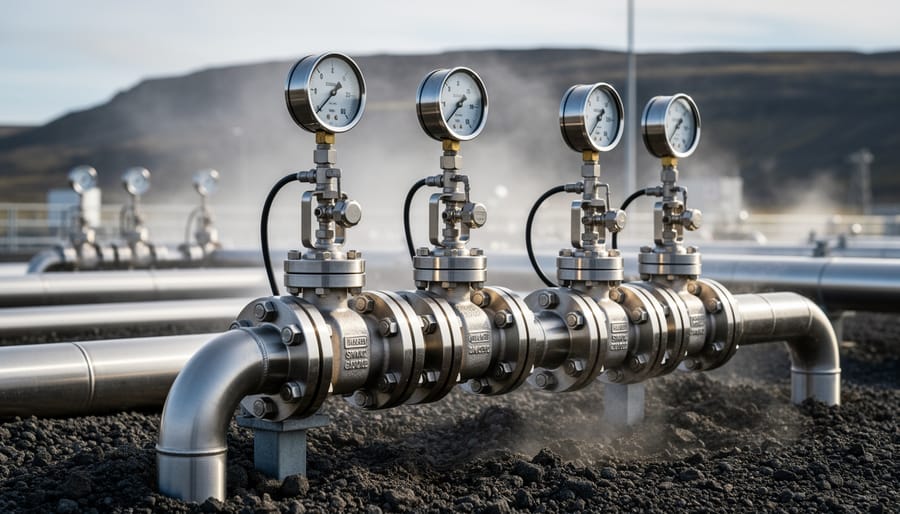
Geopressured resources exist in deep sedimentary basins where layers of impermeable clay or shale trap pressurized brines at depths typically between 3,000 and 6,000 meters. Unlike conventional geothermal reservoirs, these formations contain fluids under abnormally high pressure, often exceeding hydrostatic gradients, creating a unique energy profile that combines moderate thermal energy (90-200°C) with substantial mechanical energy from fluid pressure. Many geopressured zones also hold dissolved methane, adding a chemical energy component absent from standard geothermal sources.
The Gulf Coast of the United States harbors some of the world’s most studied geopressured reservoirs, where thick sequences of Tertiary sediments create ideal trapping conditions. Extracting energy from these resources requires specialized drilling techniques to manage extreme pressures and prevent formation damage, with production systems designed to capture heat, pressure differentials, and dissolved gas simultaneously. While geopressured sources theoretically offer vast energy potential in sedimentary provinces worldwide, their commercial viability remains limited by high drilling costs and technical challenges in sustaining long-term fluid production from compacting formations.
Magmatic Systems
Magmatic systems represent the most extreme category of geothermal power sources, characterized by temperatures exceeding 400°C and proximity to molten rock at depths typically between 2 and 5 kilometers. These systems exist where active magma chambers lie relatively close to the surface, primarily in volcanic arcs and hotspot regions like Iceland, New Zealand’s Taupo Volcanic Zone, and the Cascades.
The extraordinary heat flux from partially molten rock creates superhigh-temperature reservoirs capable of producing superheated steam directly. Several experimental projects have drilled into supercritical zones where water transitions beyond its critical point (374°C, 22.1 MPa), unlocking energy densities five to ten times greater than conventional hydrothermal fields. Iceland’s Krafla Magma Testbed project encountered molten rhyolite at 2.1 kilometers depth in 2009, demonstrating both the technical feasibility and engineering challenges of magmatic drilling.
Current limitations include extreme corrosion from acidic fluids, rapid mineral deposition in wellbores, and uncertainty about reservoir longevity when extracting heat directly from partially molten zones.
How Geothermal Power Sources Are Used Today
Electricity Generation
High-temperature geothermal sources, typically above 150°C, drive three main power plant configurations that convert thermal energy into grid electricity. Dry steam plants, the simplest design, route vapor directly from underground reservoirs through turbines, a method pioneered at The Geysers field in California. Flash steam facilities, the most common type worldwide, exploit liquid-dominated reservoirs by reducing fluid pressure in surface separators, causing instant vaporization that spins turbine generators before condensation and reinjection. Binary cycle plants handle moderate-temperature resources (90-150°C) by passing geothermal brine through heat exchangers that vaporize a secondary working fluid with a lower boiling point, usually isobutane or pentane, which then drives the turbine while the cooled brine returns underground. Unlike how hydropower is generated through gravitational potential, geothermal plants rely on Earth’s continuous thermal flux, delivering baseload output with capacity factors often exceeding 90 percent and operating independently of weather, daylight, or seasonal water availability.
Direct Use Applications
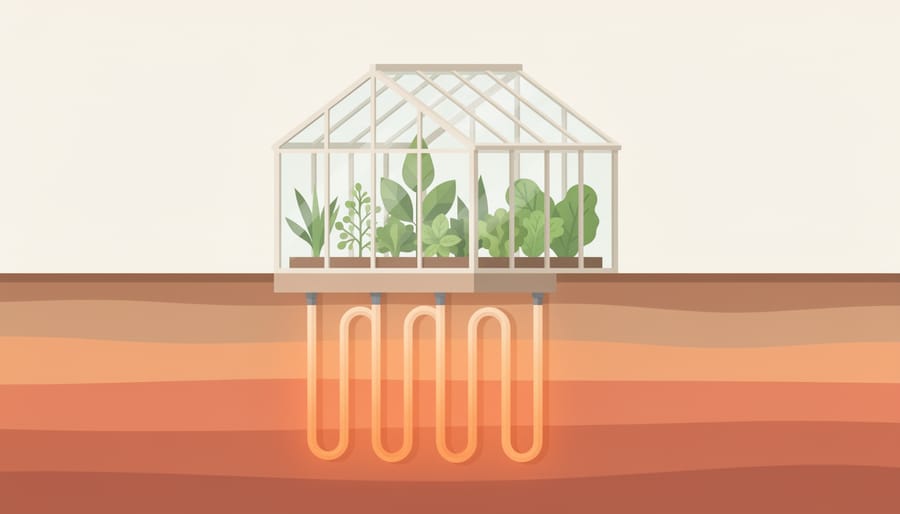
Lower-temperature geothermal sources, typically between 50°C and 150°C, deliver thermal energy directly to end users without the efficiency losses inherent in electricity generation. District heating networks in Iceland and France pump geothermal water through insulated pipelines to radiators in homes and offices, displacing fossil fuel boilers while maintaining consistent indoor climates year-round. Greenhouse operators in Netherlands and Kenya use moderate-temperature fluids to regulate soil and air temperatures, extending growing seasons and enabling tropical crops in temperate zones. Industrial facilities dry timber, pasteurize milk, and cure concrete with geothermal heat, achieving process temperatures that would otherwise require natural gas. Spa resorts and aquaculture farms tap shallow reservoirs for balneotherapy pools and fish-rearing tanks. These applications often prove more economically viable than power generation for communities near suitable resources, and they complement other distributed technologies like home solar solutions in reducing reliance on centralized grids.
Hybrid and Cascading Systems
Hybrid and cascading systems extract maximum value from a single geothermal source by routing the working fluid through successive applications as its temperature drops. After generating electricity in a binary cycle plant, the still-warm brine, often retaining 60 to 80 degrees Celsius, can heat greenhouses, aquaculture ponds, or industrial facilities before final discharge. This sequential use improves the overall thermal efficiency of the resource, sometimes recovering more than 70 percent of the original heat energy compared to 15 to 20 percent in electricity-only configurations.
Iceland’s district heating networks exemplify this approach: geothermal fluids first drive turbines, then warm buildings and streets, and finally supply hot water to homes. Cascading systems prove especially effective where demand for both electricity and thermal energy exists nearby, transforming what would otherwise be waste heat into productive output and enhancing the economic viability of geothermal projects in mixed-use developments.
Advantages and Limitations of Geothermal Sources
Geothermal power sources deliver consistent baseload electricity with capacity factors routinely exceeding 90%, outpacing the intermittency challenges that affect is hydropower reliable discussions and wind energy efficiency debates. Plants operate continuously regardless of weather or time of day, providing stable grid support. The physical footprint remains small, typically 1-8 acres per megawatt, far less than solar or wind farms of equivalent output. Lifecycle carbon emissions range from 6 to 80 grams of CO₂ per kilowatt-hour, substantially below fossil fuels and competitive with nuclear power.
Geographic availability presents the primary constraint. Economically viable high-temperature resources cluster along tectonic plate boundaries and volcanic arcs, limiting deployment in stable continental interiors. Countries without active geothermal zones must rely on enhanced systems or lower-temperature direct use, which don’t always justify the investment. Exploration and drilling costs run high, $10 million to $30 million per production well in challenging geology, with success rates sometimes below 50% in frontier areas. These upfront expenses demand long payback periods that deter financing in regions with cheap fossil alternatives.
Resource sustainability requires careful management. Overextraction can deplete reservoir pressure and reduce output over decades, as observed at some California and New Zealand fields. Reinjection of spent fluids maintains pressure but demands precise balancing. Induced seismicity from fluid injection or extraction occasionally triggers public opposition, though events typically remain below magnitude 3.0. Dissolved minerals in geothermal brines accelerate equipment corrosion and scaling, raising maintenance costs and limiting plant efficiency. Despite these hurdles, geothermal sources offer unmatched reliability and environmental performance where geological conditions align with energy demand.
Geothermal power sources represent a proven, dispatchable renewable energy pathway rooted in the continuous heat flux from Earth’s interior. Unlike intermittent renewables, these sources provide baseload electricity and direct thermal applications with minimal land footprint and greenhouse gas emissions. As exploration geophysics, directional drilling, and reservoir stimulation techniques mature, the geographic scope of viable geothermal development extends beyond traditional high-temperature volcanic zones into sedimentary basins and enhanced systems across broader continental regions.
The integration of geothermal sources into modern power grids capitalizes on their reliability and load-following capability, complementing solar and wind generation while reducing fossil fuel dependency. Direct use applications continue to expand in district heating, agricultural processes, and industrial thermal loads, often cascading energy through multiple temperature stages for maximum efficiency. Advances in wellbore materials, downhole sensors, and reservoir management software are improving project economics and resource longevity, making geothermal increasingly competitive in diverse geological settings.
How deep are geothermal sources?
Accessible geothermal sources typically range from 1,000 to 3,000 meters depth for electricity generation, though direct-use applications can tap shallower resources at 100 to 500 meters. Enhanced geothermal systems may reach 5,000 meters to access sufficiently hot rock in non-volcanic regions.
Can geothermal work anywhere?
While high-quality hydrothermal resources concentrate near tectonic plate boundaries and volcanic zones, lower-temperature sources exist almost everywhere at sufficient depth. Enhanced geothermal systems and closed-loop designs expand potential deployment to locations previously considered unsuitable.
How long do geothermal sources last?
Well-managed geothermal reservoirs can produce for 25 to 50 years or longer, with reinjection maintaining reservoir pressure and heat balance. Resource lifespan depends on extraction rates, reservoir characteristics, and operational practices.
What makes a good geothermal power source?
Key factors include high subsurface temperatures, permeable rock formations allowing fluid circulation, sufficient fluid volume or recharge rates, and reasonable drilling depth for economic development.
Looking ahead, geothermal power sources stand positioned to supply a larger fraction of global clean energy as technology reduces costs and governments prioritize carbon-free baseload capacity. The resource base far exceeds current utilization, constrained primarily by exploration risk and capital intensity rather than fundamental geological limits.